




Prevention of Musculoskeletal Disorders in the Workplace
What is Ergonomics
7 Reasons To See A Chiropractor When Hurt At Work
Prevention of Musculoskeletal Disorders in the Workplace
Musculoskeletal disorders (MSDs) affect the muscles, nerves, blood vessels, ligaments and tendons. Workers in many different industries and occupations can be exposed to risk factors at work, such as lifting heavy items, bending, reaching overhead, pushing and pulling heavy loads, working in awkward body postures and performing the same or similar tasks repetitively. Exposure to these known risk factors for MSDs increases a worker’s risk of injury.
Work-related MSDs can be prevented. Ergonomics — fitting a job to a person — helps lessen muscle fatigue, increases productivity and reduces the number and severity of work-related MSDs.
Impact of MSDs in the Workplace
Work-related MSDs are among the most frequently reported causes of lost or restricted work time.
A Process for Protecting Workers
Employers are responsible for providing a safe and healthful workplace for their workers. In the workplace, the number and severity of MSDs resulting from physical overexertion, and their associated costs, can be substantially reduced by applying ergonomic principles.
Implementing an ergonomic process is effective in reducing the risk of developing MSDs in high-risk industries as diverse as construction, food processing, firefighting, office jobs, healthcare, transportation and warehousing. The following are important elements of an ergonomic process:
- Provide Management Support – A strong commitment by management is critical to the overall success of an ergonomic process. Management should define clear goals and objectives for the ergonomic process, discuss them with their workers, assign responsibilities to designated staff members, and communicate clearly with the workforce.
- Involve Workers – A participatory ergonomic approach, where workers are directly involved in worksite assessments, solution development and implementation is the essence of a successful ergonomic process. Workers can:
- Identify and provide important information about hazards in their workplaces.
- Assist in the ergonomic process by voicing their concerns and suggestions for reducing exposure to risk factors and by evaluating the changes made as a result of an ergonomic assessment.
- Provide Training – Training is an important element in the ergonomic process. It ensures that workers are aware of ergonomics and its benefits, become informed about ergonomics related concerns in the workplace, and understand the importance of reporting early symptoms of MSDs.
- Identify Problems – An important step in the ergonomic process is to identify and assess ergonomic problems in the workplace before they result in MSDs.
- Encourage Early Reporting of MSD Symptoms – Early reporting can accelerate the job assessment and improvement process, helping to prevent or reduce the progression of symptoms, the development of serious injuries, and subsequent lost-time claims.
- Implement Solutions to Control Hazards – There are many possible solutions that can be implemented to reduce, control or eliminate workplace MSDs.
- Evaluate Progress – Established evaluation and corrective action procedures are required to periodically assess the effectiveness of the ergonomic process and to ensure its continuous improvement and long-term success. As an ergonomic process is first developing, assessments should include determining whether goals set for the ergonomic process have been met and determining the success of the implemented ergonomic solutions.
Note: An ergonomic process uses the principles of a safety and health program to address MSD hazards. Such a process should be viewed as an ongoing function that is incorporated into the daily operations, rather than as an individual project.
What is Ergonomics
Ergonomics is the science of designing jobs, workplaces and fitting equipment that will properly interact with the worker and their job demands in order to reduce or eliminate the risk of accidents, injury, chronic pain and repetitive stress thereby protecting the human body. 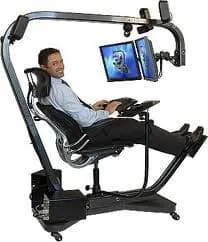
The goal of ergonomics is to minimize fatigue, discomfort, injury and emotional stress. Effective and successful ” fits” assure high productivity and injury risks, and increased satisfaction among the workforces. Examples of ergonomic risk factors are found in jobs requiring repetitive, forceful, or repetitive exertions, heavy lifting, pushing, pulling or carry heavy objects, and prolonged awkward postures.
Evidence shows that effective ergonomic interventions can lower the physical demands of work tasks. Their potential for reducing injury related cost alone make ergonomic interventions as useful tool for improving companies’ productivity, product quality, and overall business competitiveness.
Over time, the human body has adapted very well to the task of hunting for and gathering food. It performs and feels its best when it is in motion during the day and resting at night. Sitting all day, on the other hand, puts an enormous strain on the spine and its supporting tendons, ligaments, muscles, and fascia.
If you are sitting at a desk and/or computer for more than 1 hour on a regular basis, then you are what we call an “industrial athlete”. For you, proper ergonomics and micro-breaks are essential to prevent neck pain, back pain, and headaches, as well as to allow your body to get the best results from your chiropractic care.
It’s important to recognize that even the most ergonomically correct environment will not prevent repetitive stress injuries if the body is simply overworked. The body has limitations with what it can withstand. Surpassing those limitations will most definitely result in injury.
In the last 30 years the work environment has changed. Over half of all workers in the United States use computers. Computer use presents an interesting situation because there is no single accident that causes injury. Instead, injury accumulates over time through repetitive motions and static posture.
Common problems that people experience from computer use are:
- Neck pain
- Shoulder pain
- Arm / wrist / finger pain and numbness
- Back pain
- Leg / buttock pain and numbness
- Eye fatigue
- Headache
- Generalized Fatigue
If being on the computer at work can hurt you, how about the computer at home? Many people come home from work or school and hop onto the computer for entertainment or social interaction. Doesn’t home computer deserve the same consideration as one at a work site?
Then what about video games? Isn’t a video game just a computer that you place next to your TV? Isn’t the TV just a big computer screen? Don’t people sit for hours in the same place pressing buttons over and over?
Electronics have blurred the lines between work and play, and unfortunately your body doesn’t know the difference. People think of Carpal Tunnel Syndrome as being a work injury but what about Blackberry or Gamer’s Thumb? The source of repetitive injury can be your work computer, but it can also be your phone in your pocket.
Click here for link ‘Ergonomics of the Office and Workplace: An Overview’
7 Reasons To See A Chiropractor When Hurt At Work
Receive Natural, Non-Invasive Treatment
Chiropractors tend to take a more conservative approach to treating workers’ comp injuries. They try to help patients restore function without invasive medical interventions or drugs.
Medical doctors may prescribe pain relievers as the first course of action to treat a workplace injury. You want the pain to stop, but you may not want to take those powerful prescription drugs.
Pain killers work by disrupting the pain signals sent to your brain by your nerve endings. They don’t actually repair the injury or do anything to heal it. They simply cover up the pain to make you feel better.
While that relief is welcome, it’s also temporary. When the medication wears off, the pain returns.
Prescription pain medication can also be addictive, which potentially sets you up for more problems in the future.
Pain killers can also affect your mental clarity. You may not be able to operate equipment or drive when you’re on strong pain relievers. That can keep you out of work or disrupt your normal life activities.
Chiropractors focus on treating the cause of the pain instead of just masking it. The procedures can help encourage the body to heal the injury, which helps you experience less pain faster. You may feel immediate relief after your chiropractic care.
The techniques used by chiropractors are natural, so you don’t have to worry about addiction or unwanted side effects.
Chiropractic treatment is also non-invasive. Instead of jumping right to surgical options for treating an injury, trying chiropractic care is an option. It may help you avoid going under the knife.
Avoiding surgery is beneficial in multiple ways. It saves you money. A trip to the chiropractor is much more affordable than the hospital bills associated with surgery.
Surgery can sometimes have negative side effects. Some people have reactions to the anesthesia. Infection and difficulty in healing the incision can also be concerns with surgery.
It also cuts down on your recovery time. Recovering from surgery can take days, weeks, or even months depending on the scope of the surgery.
If you can find relief in a non-invasive method, you can get back to work and other activities much faster. Chiropractic treatment may decrease your pain immediately, so you feel up to working or doing everyday activities.
Speed Up the Healing Process
Workplace injuries can cause many different issues with your body. Your body may undergo jerking, shaking, or violent movement if you fall or are in a work vehicle accident.
That jarring motion can damage soft tissues and affect your spinal alignment. Getting your body back into alignment is important in letting it naturally heal itself.
Chiropractic treatment may help speed up healing and get you back to work faster by restoring proper alignment. The adjustment can ease pressure on your muscles, which relieves pain and promotes healing.
The spinal manipulation may also reduce the inflammation that happens naturally in your body after trauma. The damage caused to your tissues can cause inflammation that affects your use of those tissues.
By reducing the inflammation, your body is better able to heal. This can help you feel better overall and reduce your healing time.
Chiropractors can also help reduce the amount of scar tissue that develops in the body. Scar tissue develops naturally as an injury heals. But it can also cause more problems down the road with continued discomfort, stiffness, tension, or pain.
Working those areas helps heal the scar tissue. This can support faster overall healing and reduced pain.
The treatment may also improve your circulation, which can support the healing process.
Increase Range of Motion and Flexibility
Work injuries may suddenly limit your range of motion and flexibility. Injuries to joints make it difficult to move them normally.
Pain in other parts of your body can also limit your movement. You naturally limit your movement when it causes pain. This limits what you’re able to do after your injury.
If you avoid moving in a certain way for a long period of time, it can make the situation worse. You might develop stiffness or scar tissue in those joints. This can limit your movement even more and cause additional pain.
A spinal adjustment or manipulation can help improve your range of motion. Realigning your bones and joints gets your body back into healing mode. It may make your joints more comfortable to move.
Chiropractors may also use other techniques to support the alignment, such as massage, electrical stimulation, and ultrasound. These therapies may help ease the pain and increase your range of motion faster.
Avoid Chronic Conditions
Left untreated, your workplace injuries could cause chronic pain and other issues. Many injuries result in chronic headaches or migraines, which can interfere with your daily life. Chiropractors can help treat headaches.
Over time, injuries to the body can cause arthritis. By receiving treatment right away, you can experience the healing that may help you avoid those chronic health problems.
Not only do you receive relief now, but you help yourself avoid a lifetime of pain and issues. This also helps you avoid future treatment and expensive medical bills to correct those ongoing issues.
Uncover Additional Injuries
Some injuries are easy to identify right away. Doctors can diagnose broken bones easily with X-rays. They can see physical injuries on your body.
But other injuries are more difficult to detect. The initial pain or swelling might hide other issues, causing a delay in the diagnosis.
In other situations, symptoms don’t always show up immediately.
Say you were in an accident in a work vehicle and experienced a whiplash injury. Sometimes the symptoms don’t appear for 24 hours or longer after the accident. You may not realize you have the injury initially.
Seeing a chiropractor right away may help ease those symptoms or prevent them completely. If you do feel additional symptoms after the accident, your chiropractor can help figure out what’s causing those symptoms.
Since chiropractors have access to diagnostic imaging, labs, and other testing, they can use those resources to figure out what’s happening. They can also refer you to a primary care physician or specialist once new injuries or conditions are identified.
Document Your Injuries
The key to a successful worker’s compensation claim is early treatment and documentation. Having a doctor back you can increase your chances of getting your claim approved compared to doing it on your own.
Your chiropractor will document all aspects of your treatment in your medical files. This can become an important part of your worker’s compensation claim. The documentation can establish a connection between the work accident and your injuries.
Many chiropractic doctors have experience in treating and documenting workplace injuries. They know what to look for and what they need to document to support your worker’s compensation claim. They can complete the necessary paperwork needed for your claim.
The chiropractor will document the initial diagnosis to establish the connection. The doctor will continue taking detailed notes at each visit. This helps track your recovery and any ongoing medical issues you have, which can help helpful for your worker’s compensation claim.
Having that documentation can increase your chances of receiving financial compensation for the injury. It can help cover your medical bills, lost income, and other financial costs that come from the injury.
Treat a Variety of Injuries
Chiropractors can treat a number of conditions, not just spinal issues. The treatment can address pain in many body parts, including the back, shoulders, neck, and arms.
Chiropractic care can relieve headaches associated with your workplace injury. It can also be effective in treating carpal tunnel syndrome, chronic tendonitis, and similar repetitive strain injuries.
The treatment can also help overall pain relief and well-being. By choosing a chiropractor, you can see one health care professional for a number of issues. This can save you time and money over going to multiple specialists.
If you start with conservative chiropractic care but it doesn’t work completely, you can move on to other types of treatments. You don’t have to choose one type of treatment and stick with it no matter what happens.
Chiropractors work regularly with other medical professionals. That means your chiropractor can refer you to a specialist or other medical professional if needed.
If you’re receiving treatment from a primary care doctor, surgeon, or other medical care experts, your chiropractor will stay in communication with them. The different doctors work together to best treat your condition and pain.
When to See Chiropractor
If you’re wondering when to see chiropractor doctors, the answer is as soon as possible after a workplace injury. Chiropractors can treat a number of conditions with non-invasive, drug-free treatments that can help you heal faster. You may find this conservative method of treatment is enough to improve your injury, saving you time and money.