



Elbow Conditions
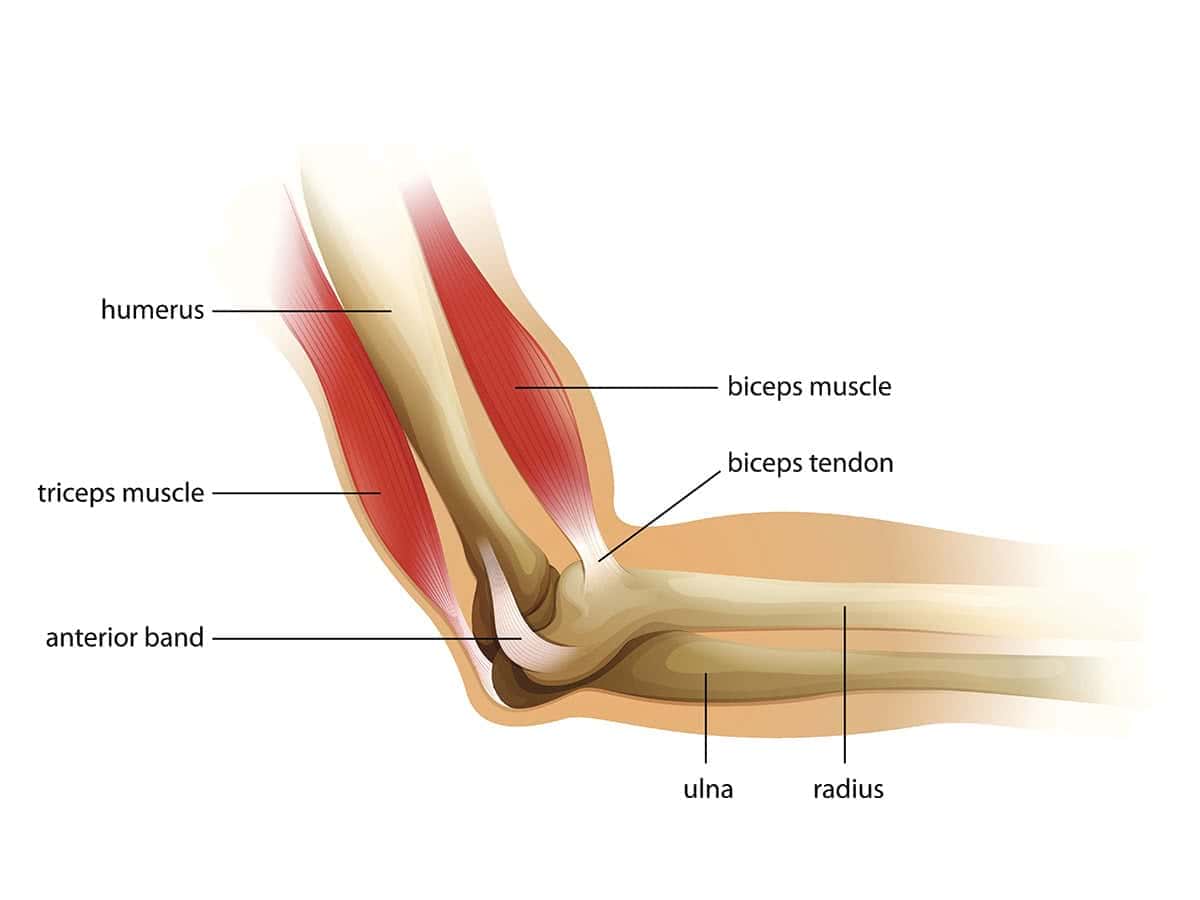
Acting as a link between the shoulder and hand, the elbow is often challenged by overuse and repetitive motion. These activities, frequently the result of playing sports such as golf or tennis, account for the majority of elbow-related complaints and conditions. Chiropractic care can offer a natural approach to healing your injury and promoting healthy and functional elbows.
Your chiropractor will be able to identify the structures that have been damaged in your elbow and place you on a plan of care to stretch, strengthen and get your elbow functioning properly again. He or she may use adjustments, physiotherapeutic modalities, such as ultrasound, and various types of exercises to promote and restore healthy tissue and movement in the elbow
Lateral epicondylitis, also known as tennis elbow, is a common problem among physically active people and, as the name suggests, tennis players in particular. Anyone who performs repetitive movements of the elbow, like a carpenter or painter, or who repeatedly moves the wrist forward and backward, such as tennis players on their backhand stroke, is susceptible. Such motions can strain tendons in the arm. Over time, the strain causes inflammation of the muscles and soft tissues around the elbow and can also cause muscles in the arm to become unbalanced.
Ideally, extensor muscles, which pull the wrist up, work with equal force to flexor muscles, which pull the wrist down. But when one group is weaker than the other, problems can develop. With tennis elbow, the extensor muscle group on the outside of the forearm often becomes weak or relatively weaker than the flexor muscles on the inner forearm, leading to a muscle imbalance and ultimately inflammation and pain.
Tennis elbow can also develop in people who have good muscle balance but overuse their wrist extensor muscles. This is commonly referred to as a repetitive strain injury, and also leads to inflammation. Regardless of the cause, however, your chiropractor can decrease inflammation, restore proper muscle balance if necessary and help improve your pain-free range of motion.
Medial epicondylitis commonly affects golfers, baseball pitchers and almost anyone who overuses his or her wrist or elbow during work or sports. In the case of baseball, think of a pitcher winding up, throwing his arm back and releasing the ball as he brings his arm round and snaps his wrist downwards. This motion is wrist flexion. If the pitcher wants the ball to curve to the side he’s throwing from (what pitchers call a screw ball), he’ll have to snap his wrist inward as well, as if he were unscrewing a light bulb. This motion is wrist pronation. Movements combining flexion and pronation are the major cause of medial epicondylitis.
Patients with the condition feel pain in the elbow, on the inside where there’s a bony bump. They also commonly have an ache or pain around the inside of their elbow joint and possibly in the surrounding muscles. When they lift their wrist with the palm up, as if they were picking up a table, the pain worsens, and movements that involve flexion or pronation can be unbearable.
Any activity that involves repetitive flexion and pronation, like hammering, golfing and playing tennis, can lead to medial epicondylitis. During these activities, excessive force on the wrist flexors, which are muscles that connect the wrist to the elbow, can strain the inner part of the elbow joint. The body reacts to this strain with painful inflammation.
If left untreated, the condition can become chronic, so it’s important to see your chiropractor if you’re experiencing symptoms of medial epicondylitis. He or she will use a variety of management techniques and probably prescribe braces and exercises to support and strengthen the elbow joint.