



Spondolysis
Chiropractic Treatment Can Help Ease the Pain of Spondylosis
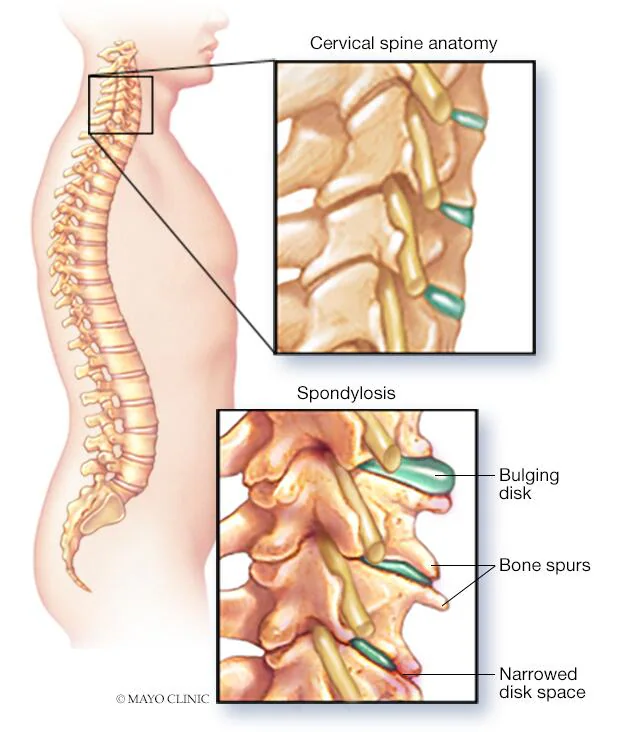
As you age, the discs begin to dehydrate and shrink. As a result, they can’t absorb shock quite as well as they could when you were younger. Your disks begin to gradually change around age 40, although you may not notice any differences for years.
The dehydration process can cause cracks or tears in the outer layer of disks, increasing your risk of herniated disks. Herniations happen when the soft, gel-like center of the disc protrudes and presses on spinal nerves, causing pain.
The space between the vertebrae gradually narrows as the discs flatten due to dehydration. When this occurs, painful bone spurs may form at the ends of vertebrae.
Age-related changes can also wear away the protective cartilage that cushions the ends of the vertebrae and stiffens the ligaments that hold the vertebrae together, resulting in pain and stiffness when you bend and move.
Your risk of spondylosis increases significantly with age. The Mayo Clinic notes that more than 85 percent of people over age 60 experience spondylosis in their necks.
Severe neck and back pain can occur if your condition worsens. You may notice that it’s difficult to move or walk and may experience weakness or tingling sensations in your arms or legs.
Chiropractic treatment can relieve pain, improve your range of motion and reduce pressure on your spinal nerves due to herniated discs or bone spurs. After performing an examination and conducting a few diagnostic tests, your chiropractor may recommend one or more of these treatments:
- Spinal Adjustment: Your chiropractor uses quick, hands-on pressure or an activator to realign your vertebrae. Adjustment improve range of motion in your neck and back, decrease pain and make it easier to move the muscles in your neck and back. After an adjustment, you’ll notice less pain and stiffness. Spinal adjustment is among the treatmentthat the American College of Physicians recommends for the treatment of nonradicular low back pain. Nonradicular pain is pain that doesn’t spread to your arms or legs.
- Spinal Mobilization: Spinal mobilization stretches the spine and decreases tension in the muscles between your vertebrae with slow, gentle movements.
- Flexion-Distraction: Flexion-distraction is performed on a segmented table. As your chiropractor slowly manipulates your spine, the table moves beneath you, decompressing and stretching your vertebrae. Flexion-distraction improves mobility, decreases pressure on nerves and discs, reduces bulging of disks, and eases pain and stiffness.
- Massage: Spinal alignment issues can cause painful stiffening in the muscles of your back and neck. Massage relaxes these muscles and improves blood flow to the area, facilitating recovery.
- Traction: Traction treatments gently pull and decompress your vertebrae, relieving pain and stiffness and decreasing pressure on your nerves. The therapy can be performed manually or with a special device.
- Other Therapies: Depending on your diagnosis, your chiropractor may also suggest ultrasound therapy, cold and heat therapy, electrical nerve stimulation treatment or trigger point therapy.Don’t let spondylosis pain take over your life. Chiropractic treatment offers a safe, natural way to control your symptoms. Contact us to schedule your appointment.
Sources:
Mayo Clinic: Cervical Spondylosis
Arthritis Foundation: How Chiropractors Can Help Arthritis Pain
American Chiropractic Association: Neck Pain and Chiropractic
American College of Physicians: American College of Physicians Issues Guideline for Treating Nonradicular Low Back Pain
Breakthrough Spondylosis Treatment Methods & Technology
Dynamic Spine Center has the expertise, 20+ years of experience treating spondylosis through the combined efforts of our clinical physiotherapists & evidence-based chiropractors. If you have spondylosis, you must avoid all the rotatory methods of chiropractic treatments and physiotherapy. Spondylosis physiotherapy & painless chiropractic treatments are highly specialized. Rotatory neck or back manipulations (Gonstead&Diversifed chiropractic methods) can harm your spinal joints or spinal discs. Contact one of our centers and start your spondylosis treatment by advanced non-surgical methods of NSD Therapy® today.
Spondylosis: Cause, Classification & Treatment Options Without Spine Surgery
The medical term Spondylosis is descriptive of degenerative disorder of the spine. Almost anyone can develop spondylosis (spondylotic changes, including bone spur) as they grow older. However, several predisposing risk factors increase the possibility of some individuals developing spondylotic changes.
The most common risk factors associated with this condition include obesity, poor posture, traumatic injury, and participation in high-impact sports, as well as genetic factors. Despite this, the natural aging process is still considered the primary risk factor for pain or symptoms. Visit our center for a thorough analysis of your spine. Our clinical teams are the spine and joint experts you need. Visit us today to assess your posture and spine.
With time, spinal soft tissues composed of cartilage, spinal discs, ligaments, muscles, and tendons deteriorate due to normal wear and tear. With degenerative spine changes, your risk factors in the development of spondylosis and bone spur increase significantly.
Bone Spur, Osteophytes, Slipped Disc (Slip-Disc) & MRI Assessments
How Slipped Discs, Degenerations & Bone Spurs Impacts Spinal Segment
The spine is made up of 33 vertebrae. The coming together of the first 24 vertebrae (spinal bones) forms the three (3) spine regions, which are lumbar (lower back), thoracic (mid-back), and cervical (neck). The remaining nine segments form the coccygeal and sacral regions of the spine. Therefore, the most common areas of the spine that are affected by spondylosis are the lumbar (lower back), thoracic (mid-back), and cervical (neck). With this, spondylosis classification is by location.
As mentioned, spondylosis is the term that refers to conditions that lead to spinal joint arthritis (bone spurs or facet hypertrophy), thickening of ligamentumflavum (ligamentumflavum hypertrophy), and varying degrees of slipped discs. Regardless of the cause, conservative treatment should be your first and only option. Spine surgery is an option best avoided or reserved as the last option. CSC has a success rate of over 95% in the treatment of pateints with spondylosis. Therefore, opt for our corrective care before you consider surgery or injections. But, again, surgery should be the last option!
What Are The Typical Signs & Symptoms Of Spondylosis?
- Fatigue
- General unwell feeling
- Restricted motion or lack of mobility
- Stiffness in the neck, upper back, or low back
- Pain in the neck, upper back, low back, and buttocks
- Headaches and migraines
- Tinnitus and vertigo
- Numbness and tingling in the arms or legs
Best Home Remedy for Spondylosis
- Stop slouching
- Avoid excessive phone or pad use as it increases stress on your spine.
- Avoid a seated position where you lean forward.
- Stop carrying heavy backpacks or purses.
What Is The Best Treatment For Spondylosis?
Precision is essential! Precision occurs when all aspects of spondylosis are treated concurrently. In other words, you will have to get care for the muscles, ligaments, joints, spinal discs, and spinal nerves for the spondylosis treatment to last. In some way, spondylosis treatment is similar to the care provided for a slip-disc.
Chiropractic Specialty Center® provides the best slip-disc and spondylosis treatment in Malaysia. Our slipped disc (slip-disc) treatment targets spinal ligaments, muscles, joints, discs, and nerves. Spondylosis and slip-disc treatments are nearly identical. As such, we have provided a video of our slip=disc treatment to familiarize you with some of the therapies we will recommend. However, keep in mind that you may require additional procedures if your condition warrants them.
In The Lumbar Spine Spondylosis (Slipped Discs, Bone Spurs & Spinal Degenerations) Are The Leading Cause Of Pain & Disability
Lumbar spondylosis affects the lumbar vertebrae (L1-L5). The lumbar or the low back is the second most common location for spondylosis. The most common symptoms include low back pain, pain in the buttocks, hips, thighs, legs, and ankle. Also, it can lead to numbness, tingling, weakness, and paralysis of one or both legs. The longer your condition goes untreated, the more risks you take. Progression is a certainty! As such, the need for effective measures that correct, fix, and repairs the root causes as early as possible.
Visit our center for the best non-surgical slipped disc treatment in Malaysia today. Our methods of care are through specialized back pain exercises, advanced chiropractic treatments, and clinical physiotherapy. As a result, we can help even severely degenerated discs or herniated spinal discs.
Spondylosis In The Thoracic Or Upper Back Pain
Cervical Or The Neck Is Common Site For Spondylosis
Cervical spondylosis is, by far, the most common type of spondylosis diagnosed. Spondylosis in the neck can affect one or more of the seven vertebrae (C1-C7). The most common segment for spondylosis in the neck is at the C5-C6 segment of C6-C7. Cervical spondylosis symptoms include neck pain, headaches, migraines, tinnitus, vertigo, back pain, shoulder pain, and arm pain. Importantly, it is the leading cause of tingling, numbness, and weakness in the shoulder, arms, elbows, wrists, and hands.
If you have cervical spondylosis, seek our help immediately! Our advanced methods and breakthrough spine technology have helped thousands without the need for injections or surgery.
The cervical spine (the neck) has a tremendous range of motion and mobility. These factors and the fact that it bears the head’s weight predispose the neck to spondylosis at greater levels than the spine’s lumbar (lower back) region. Additionally, our modern gadgets and handheld electronic devices are the main culprits for increased risk factors in developing this degenerative condition in the neck. CSC’s neck pain treatments and neck pain exercise programs are enriched with treatments provided by advanced spine technology. Chiropractic Specialty Center® succeeds even if others have failed to get you better.
Spondylosis should not be confused with spondylitis. While spondylosis refers to degenerative changes resulting from arthritis and spinal disc issues, spondylitis is descriptive of an inflammatory type of arthritic changes, such as ankylosing spondylitis.
Common Locations For Spondylosis
Spondylosis can occur at any segment. However, the most common site for spondylosis is the cervical and lumbar spine (neck & back). In the neck, the C5-C6 is the most common site for spondylosis, and the L4-L5 is the most common spondylosis in the lower back. The three most common areas of spondylosis in the neck are:
- C4-C5 motion segment
- C5-C6 motion segment
- C6-C7 motions segment
- L3-L4 motion segment
- L4-L5 motion segment
- L5-S1 motions segment
Symptoms Of Spondylosis & Degenerative Disc Disease
Patients suffering from this degenerative spine disorder do not always experience symptoms. Some patients may never experience symptoms up until they are involved in a traumatic incident. This means that spondylosis patients may not experience pain, numbness in the arms, legs, hands, or feet
Typically, the symptomatic patient may complain of a lot of symptoms. For example, some may complain of pain, numbness, tingling sensations, and muscle weakness. However, the symptoms most arise when the disorder causes an anatomical deformity in the spinal joint, leading to impingement and irritation of the spinal cord (canal stenosis) or spinal nerves. Often, the irritating cause is a bone spur, ligament calcification, bulging disc, or herniated discs (slip-disc or slipped disc) that compress spinal nerve roots as well as the spinal cord itself.
Apart from the symptoms mentioned above, other symptoms associated with this condition include stiffness, inflammation, back pain, neck pain, and a decreased range of motion.
What Are Some Of The Treatment Options For The Spine In Malaysia
injections, and surgery. However, pain medication and surgery have failed to give patients the lasting relief they need. Conservative treatment approaches must be explored, such as physical therapy (physiotherapy) and clinical chiropractic care.
Acupuncture has had some successes in reducing the pain, but it cannot fix the cause. Often, patients that receive acupuncture find themselves in pain. Therefore, we would recommend a course of care that addresses the real cause and not just the symptoms.
In other words, acupuncture, medications, and injections do not offer much help in the long haul. So visit our center today and get the best chiropractic treatment in Malaysia today. Best of all, the treatment you get in our center is a painless therapy that fixes the actual cause of spondylosis.
What Is The Best Treatment For Spondylosis & Spine In Malaysia?
The most suitable physical therapy treatment for the spine is the integrative chiropractic and physical therapy methods at our centers. We offer the best physical therapy and chiropractic treatment for spine, joints, and sports injuries in Malaysia. Invasive treatment options, such as surgery, are not recommended as they pose a greater risk to patients.
Accurate diagnosis and identification of the root causes are critical for patients’ successful treatment and speedy recovery. Therapy programs or treatment options that are not corrective will fail to produce the desired outcome. Some may improve a bit, but the pain often returns! Therefore, our advice is to seek neck pain clinicians and practices with experienced, knowledgeable clinical staff who understand all root causes and have the abilities and methodologies for targeted care methods.
Chiropractic and physiotherapy treatments are helpful if they are targeted the way we do at CSC. Additionally, those with bone spurs may want to avoid the traditional means of physiotherapy or chiropractic. Physiotherapists and chiropractors treat a host of the spine and joint conditions, but spondylosis requires specialized knowledge and ability. Above all, care must be taken not to aggravate or exacerbate a patient through aggressive treatment means.
To summarize, neck and upper back pain conditions that result from spondylosis need focused corrective care. As such, visit our center for the best neck and upper back pain sufferers may not be as effective. An excellent example of aggressive treatment is the rotatory chiropractic adjustments or excessive manual therapy and range of motion exercises.
The Chiropractic Specialty Center® Difference In Spondylosis Treatment
Early stages of spinal spondylosis cases are asymptomatic or may present with slight pain. However, not dealing with it in the right way may lead to severe consequences down the road. So please don’t take it lightly and get your spine checked by one of our non-surgical clinical experts today.
Our success for spondylosis speaks volumes about our abilities, knowledge, and experience. In short, if you have spondylosis and need treatments, we are your best option in Malaysia. In addition, our proven method of spine care is a testament to the level of research-based, non-surgical treatment you can expect from the Chiropractic Specialty Center®.
Our aim in the treatment of spondylosis is not just symptom relief but also correction. As such, we offer targeted, diagnosis-based treatments through the combined efforts of the best clinical physiotherapists, World-Class research-based chiropractors, and advanced spine technology. Thus, our go-to method for this degenerative spine disorder is the best-targeted and diagnosis-specific method offered through NSD therapy® methods.