



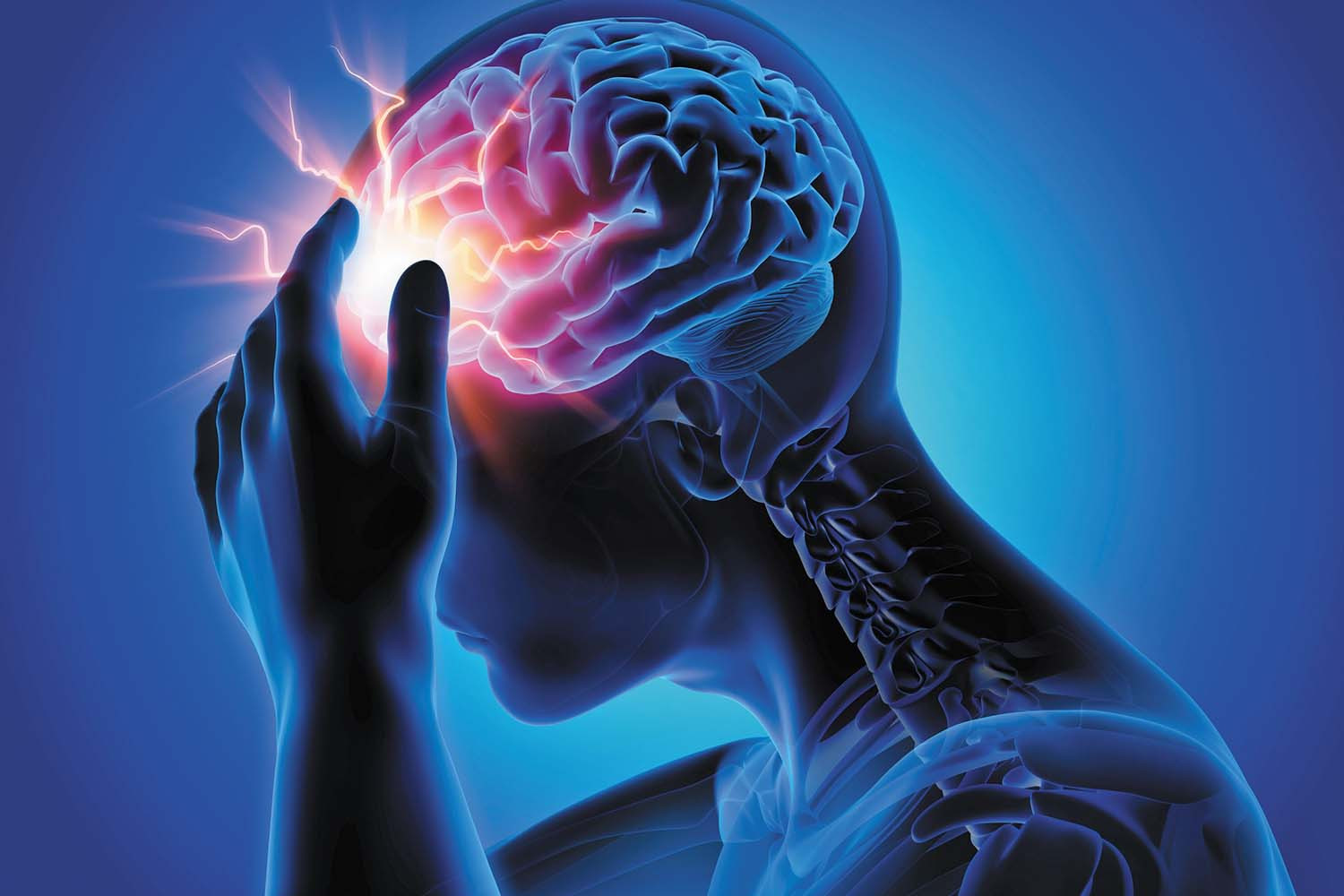
If you have headaches that don’t just hurt your head, but also involve pain or lack of movement in your neck, you may be experiencing vertebrogenic headaches. Vertebrogenic headaches are one of two kinds of headaches that originate in the neck, the other being myogenic. (When dysfunctional or irritated vertebrae cause the pain, the headaches are vertebrogenic. When strained or irritated neck muscles cause the pain, the headaches are myogenic.)
People who experience vertebrogenic headaches generally feel a dull, constant ache on one side of their head as well as tenderness in the neck region. The pain usually begins in the neck and makes its way up behind the eyes, and possibly to the ears and the top or side of the head. The duration of these headaches varies from episode to episode and can last anywhere from a couple of hours to a couple of weeks. Prolonged periods of bad posture can often make people more susceptible to these types of headaches. For this reason, secretaries, truck drivers and car mechanics, who often hold positions that cause gradual postural changes in the body, are at risk. Poor posture can create neck abnormalities, which can affect the function of the cervical spine, leading to subluxations (stuck or misaligned joints) and spinal joint dysfunction. Previous injuries to the head or neck, such as those people suffer in motor vehicle accidents, can also bring about vertebrogenic headaches. That’s why it’s important for people who experience trauma, like whiplash, to get appropriate chiropractic care.
In fact, to correct any spinal joint problems that can contribute to headaches, it’s best to see your chiropractor. Chiropractic care is highly effective in decreasing the intensity and duration of vertebrogenic headaches. Your chiropractor can restore movement in the joints of your neck to alleviate symptoms and help prevent the condition from returning.
What are the Causes of Vertebrogenic Pain, and How Is It Treated?
Vertebrogenic back pain, or vertebral endplate pain, is caused by damage to the endplates of your vertebrae. Your endplates contact the rubbery disk between each pair of vertebrae.
The idea that damage to your endplates may play a significant role in chronic lower back pain has gained significant popularity among researchers in recent years. It’s now known that there are a significant number of pain receptors in your endplates connected to a nerve inside your vertebra called the basivertebral nerve.
As of now, the most consistent and specific treatment for vertebrogenic pain is a procedure called basivertebral nerve ablation. This minimally invasive procedure involves using a laser to stop the basivertebral nerve from sending pain signals to your brain.
Read on to learn more about vertebrogenic back pain, including its symptoms, how it’s diagnosed, and how it’s managed.
Vertebrogenic pain symptoms
Vertebrogenic pain tends to appear as lower back pain along the midlineTrusted Source of your spine.
Pain often worsens with:
- bending forward
- sitting for prolonged periods
- physical activity
Pain is usually described as:
- deep
- aching
- burning
Some people have referred pain (pain that’s felt elsewhere in the body) in the area around their spineTrusted Source or glutes.
Some people have pure vertebrogenic pain, while others also have pain related to a degenerated disk. A degenerative disk is the breakdown of a disk from chronic wear and tear.
If a degenerated disk in your lower spine puts pressure on your spinal cord, it may also cause symptoms in your lower body like:
- numbness
- tingling
- weakness
Vertebrogenic pain causes
Vertebrogenic pain is caused by damage to the endplates of your vertebrae. Your endplates are the parts of your vertebrae that contact your disks. They play an important role in dispersing forces from your disks to prevent injury. Arteries in your endplate also provide nutrients to your disks.
Researchers in the late 1990sTrusted Source discovered that the bony tissue in the body of your vertebrae is filled with blood vessels and pain receptors connected to the basivertebral nerve. It’s now known that damage to your endplates can lead to the stimulation of these pain receptors.
Who gets vertebrogenic pain?
Chronic lower back pain is very common, but a specific cause is only identifiable in about 20%Trusted Source of cases.
Vertebrogenic back pain may make up a significant portion of pain previously assumed to be caused by disk degeneration.
Factors linked to the development of degenerative disks include:
- older age increased height obesity
- heavy physical work smoking family history
Vertebrogenic (low back) pain diagnosis
A doctor will start by considering your personal and family medical history and performing a physical exam. A physical exam may involve having you move in certain ways, such as bending forward to see if these motions cause pain.
The doctor will likely send you for imaging tests if they think you may have a problem with your spinal column.
The primary way that doctors diagnose vertebrogenic pain is with magnetic resonance imaging (MRI). An MRI can identify changes around your endplates that might be stimulating pain receptors and contributing to your pain.
Two characteristic features called Modic type 1 and 2 changesTrusted Source are usually seen with an MRI:
- Modic type 1: Bone marrow swelling and inflammation
- Modic type 2: Red bone marrow replaced with yellow fatty bone marrow
There is emerging evidenceTrusted Source that another type of imaging called single photon emission computed tomography (SPECT) scans might also be able to identify changes to your spine characteristic of vertebrogenic pain.
How do you treat vertebrogenic pain?
As with most causes of chronic back pain, doctors usually recommended trying conservative treatment before surgery. Conservative treatment options include:
- nonsteroidal anti-inflammatory drugs (NSAIDs)
- muscle relaxants
- physical therapy
If your pain doesn’t improve after trying conservative treatment options for at least 6 monthsTrusted Source, your doctor may recommend basivertebral nerve ablation. This minimally invasive procedure involves using a laser to heat your basivertebral nerve to keep it from transmitting pain signals to your brain.
Basivertebral nerve ablation procedure
Here’s a general idea of what you can expect during basivertebral nerve ablation.
- You’ll receive general anesthesia or a sedative through an IV and be positioned face down.
- Your surgeon will mark the treatment area, which will be confirmed with C-arm fluoroscopy or a CT scanTrusted Source.
- They’ll make a small incision in your skin to insert a thin tube called a cannula into the body of your vertebra.
- A radiofrequency probe will be inserted into the cannula and used to heat your nerve.
- Afterward, your skin will be closed and covered with a dressing. You can usually go home on the same day as your procedure.
Your head pounds, you can’t focus and the only thing you can do is crawl under the sheets until it all subsides. If this sounds familiar, chances are you get migraines.
Migraines are headaches that are more frequent and intense than everyday headaches. The word migraine, derived from the Greek hemikrania, which means “half of the head,” refers to a throbbing pain in one side of the head that’s often accompanied by a stiff and tender neck, extreme sensitivity to light and noise, difficulty concentrating, nausea and increased pain during routine physical activity. These symptoms typically last about four hours but can last as long as three days. And after the initial symptoms subside, people often feel physically exhausted and mentally foggy.
Migraines generally fall into two categories: classic and common. Most people who get migraines experience the common type, but about 20% experience classic migraines that involve common migraine symptoms accompanied by an aura, which is a visual disturbance that manifests as blurry vision, blind spots, zigzag lines or tunnel vision (a loss of peripheral vision). If you get migraines but don’t recognize these symptoms, you probably get common migraines.
The first experience of a common migraine typically occurs early in life. Twenty-five percent of people who get migraines have their first one before age 10, more than 55% have it before age 20 and more than 90% have it before age 40.
Gender and genetics seem to play a role in who experiences the condition. Women are three times more likely to have migraines, and about 90% of people who get them have a family history of the condition, according to the American Council for Headache Education.
If people have a predisposition to migraines, certain triggers can cause them. These include emotional stress, physical exertion, changes in the weather, environmental pollutants, certain medications, foods such as dairy products, red wine and chocolate and changes in sleep patterns.
Researchers don’t know why these things trigger migraines, nor what physical processes cause the condition. Studies are currently focusing on the role of blood flow in the brain and head, hormonal changes in the central nervous system and electrical imbalances in cells.
Researchers do know, however, that when something triggers a migraine the ensuing symptoms can be debilitating, reducing people’s quality of life and affecting their relationships and job productivity.
But there is help. Studies show that chiropractic care can effectively reduce the frequency and intensity of migraines.
When you first visit your chiropractor with the condition, he or she will take a detailed history and perform a physical and neurological examination to determine what factors are contributing to your condition. Following this, your chiropractic care can begin.
Suffering with Migraines? Here’s How Chiropractic Can Help

It’s estimated that over 36 million Americans suffer with chronic migraines each year, a condition that can be completely debilitating and destructive to quality of life. Many people don’t even realize that they are suffering with migraines—they may believe that they only experience severe headaches, eye strain, or digestive discomfort, all of which can manifest as symptoms of a migraine. A migraine can take many forms:
Classic Migraine
A classic migraine is often accompanied by aura, which refers to the changes that occur in sensory perception prior to the onset of the migraine. This feels like a severe headache, as well as potentially dizziness, ringing in the ears, visual disturbances (spots, lights, zigzag lines) and light sensitivity. Migraines without aura may feel like a severe headache with not sensory changes or disturbances, accompanied by lethargy, digestive distress (nausea and vomiting), or aphasia.
Ocular Migraine
Relatively rare, ocular migraines cause a loss of eyesight in one eye for a short period of time (typically under 60 minutes). A regular migraine often affects eyesight, too, but in both eyes.
Silent Migraine
Silent migraines include the symptoms of a classic migraine, but without the accompanying headache that migraines are so commonly known for. A silent migraine can be hard to notice, especially if it occurs frequently and is believed to be “normal.” Silent migraines may appear as mood swings, intense food cravings, inexplicable exhaustion, stiffness in the neck, and digestive malfunction.
Hemiplegic Migraine
Hemiplegic migraines are rare, and its symptoms are known to be similar to that of a stroke. Hemiplegic migraines can cause extreme muscle weakness and temporary paralysis, severe, throbbing pain, numbness or tingling in the hand and arm, loss of balance and coordination, and dizziness. It may also be accompanied by digestive upset, including nausea and vomiting.
Vestibular Migraine
Vestibular migraines are characterized by the presence of vertigo and dizziness. A vestibular migraine may not include a headache (similarly to a silent migraine), but will differ in that the symptoms are centered on loss of balance, dizziness, disorientation and confusion, and digestive distress (including nausea and vomiting).
Menstrual Migraine
Typically linked to sudden changes in hormonal levels, menstrual migraines can occur as a result of hormonal birth control, hormone replacement therapy, menopause, pregnancy, or normal menstruation. Menstrual migraines may or may not include a headache, digestive distress, throbbing head pain, and sensitivity to light and sound.
Abdominal Migraine
Similarly to vestibular and silent migraines, abdominal migraines are rarely accompanied by a headache. Instead, the migraine is centralized to the abdominal area and includes nausea, stomach pain, cramps, lethargy and exhaustion, and a loss of appetite. Abdominal migraines are most common in children, and are often predictive of future migraines as an adult.
Basilar Migraine
Unlike classic migraines, basilar migraines are accompanied by a brainstem aura. Brainstem auras affect vision and balance, and can create double vision, vertigo, and lack of coordination.
Cyclic Migraines
Cyclic migraines occur in regular cycles. Most people who experience cyclic migraines will suffer 10 attacks a month. Their migraines will persist for up to two days, and then disappear for 1 to 6 weeks.
The Role of Chiropractic Care
While it is not known exactly what causes migraines and migraine headaches, there is currently no medically recognized cure. Individuals who experience chronic migraines are often prescribed prescription medications or over-the-counter medication, and advised to utilize it when they sense the first symptoms that indicate a migraine may be impending (called premonitory symptoms). The premonitory phase of a migraine may not include pain at all, and chronic migraine sufferers may train themselves to recognize symptoms like stiffness in their neck, unusual lethargy, yawning, or more frequent urination days before the actual migraine manifests. Unfortunately, this can be a difficult burden to live with, causing chronic migraine sufferers to miss events, forfeit appointments and plans, and become absent from important parts of their daily lives to deal with the pain and discomfort that migraines produce.
This is where chiropractic care makes itself known as an invaluable resource for addressing migraine frequency and severity. While the exact mechanism by which chiropractic care delivers migraine relief is not fully known, it is known that chiropractic can provide significant relief for chronic migraine sufferers. Migraine treatment interventions utilizing chiropractic care may include postural correction (adjustments, spinal traction, Chiropractic BioPhysics®) or manual manipulation of muscle and tissue (craniosacral therapy, myofascial trigger point therapy, soft tissue release).
While some individuals are more prone to migraines than others, there are many triggers associated with the onset of a migraine. These include stress, medications, certain foods, hunger, hormonal changes, flickering and flashing lights, changes in air pressure and altitude, dehydration, sleep deprivation, alcohol, and strong food, chemical, and perfume smells.
Chiropractic care works as a holistic form of treatment to address several kinds of imbalances in the body. In addition to helping realign the spine, chiropractic care can also relieve muscles, ligaments, and tendons that are over-stressed and strained. Chiropractic care can regulate the central and peripheral nervous systems, both of which are highly implicated in headaches, sensory disturbances, and nerve pain. Chiropractic care can improve immune function by decreasing stagnation in the body and helping to circulate blood and lymph around the body, aiding in the detoxification and purging of waste. Chiropractic care can also boost the circulation of cerebrospinal fluid (CSF), which aids in supplying nutrients and oxygen to the brain, as well as removing cellular waste.
The holistic and comprehensive way in which chiropractic care addresses many imbalances in the body simultaneously makes it a powerful intervention for chronic migraine sufferers. Overall, chiropractic care helps to decrease inflammation in the body, restore optimal neuronal function and connectivity, release tight and over-stressed muscular regions of the body, and support mobility. If you or someone you love suffers from chronic migraines, consider seeking expert chiropractic treatment. Your expert chiropractor will complete a thorough assessment to fully understand your symptoms, lifestyle triggers, and the way that your body can best be supported to help restore your highest level of health, vitality, and comfort
Almost everyone has experienced some type of headache, but migraine headaches with aura, also known as classic migraines, are a very specific type involving more than just pain.
The word migraine, derived from the Greek hemikrania, which means “half of the head,” refers to a throbbing pain in one side of the head that’s often accompanied by a stiff and tender neck, extreme sensitivity to light and noise, difficulty concentrating and nausea.
Despite the name’s origin, the pain may also travel throughout the entire head at times. The symptoms can last as little as four hours or as long as three days and are often followed by a postdrome (aftereffect) phase during which patients feel exhausted and mentally inept.
Classic migraines also involve what health-care practitioners call an aura, which is a pre-migraine period lasting between 15 and 60 minutes that involves zigzag lines or shimmering stars in the field of vision. Some patients with the condition also report having blind spots and tunnel vision (an inability to see to either side), and in rare instances report speech disturbances, confusion and odd sensations such as tingling, numbness or weakness in the arms or legs. Within an hour, the symptoms associated with the aura usually subside and the migraine headache pain develops.
All types of migraine headaches affect women more than men, by a ratio of about three to one. Genetics also plays a role, and the American Council for Headache Education reports that about 90% of people who get migraines have a family history of the condition.
Approximately 20% of people who have migraines will experience auras. Why some people get them, and others don’t is still largely a mystery. In fact, researchers don’t even understand the exact cause of migraines in general. Currently, they’re focusing on the relationship between migraines and blood flow in the brain, electrical imbalances in cells and hormonal changes in the central nervous system in the hopes of uncovering the mechanism that causes the condition.
They already know, however, that a variety of things are correlated with migraines, including emotional stress, intense physical exertion, changes in the weather, environmental pollutants, certain medications, changes in sleep patterns and foods such as dairy products, red wine and chocolate.
Research also shows that people who get migraines, both with and without auras, have less frequent and less intense headaches after receiving chiropractic care. If you get migraines with aura, your chiropractor will investigate their nature by taking a detailed history of your condition and performing a physical and neurological examination to rule out any organic causes, such as tumors.
Once he or she determines the factors that are contributing to your migraines, your chiropractic care can begin. This will probably include spinal manipulative therapy, also called adjustment, to relieve subluxated (stiff or immobile) joints and inhibit pain receptor activity.
If you have headaches that don’t just hurt your head, but also involve pain or lack of movement in your neck, you may be experiencing myogenic headaches. Myogenic headaches are one of two kinds of headaches that originate in the neck, the other being vertebrogenic. (When strained or irritated neck muscles cause the pain, the headaches are myogenic. When dysfunctional or irritated vertebrae cause the pain, the headaches are vertebrogenic.)
People with myogenic headaches often feel mild to severe discomfort or pain on one side of their head, although this pain can occur on both sides. The pain usually starts in the neck but can also start in tight muscles at the back of the head and even in muscles that work the jaw. From either of these places, the pain can spread to the temples and possibly a combination of the ears, eyes and top of the head.
The pain of a myogenic headache can be severe, although it is rarely accompanied by extreme migraine symptoms such as nausea or sensitivity to light and sound. The duration of pain varies from episode to episode and can last anywhere from a few hours to a couple of weeks.
If you have a myogenic headache, you may find that awkward or uncomfortable postures and certain neck movements, like turning or bending, can make the pain worse. The muscles around your neck may also be tight and abnormally tender, and your neck may resist certain movements and be unable to move through its normal range of motion.
Because neck muscle stiffness or tightness can lead to myogenic headaches, a variety of events that affect the neck can cause the condition. These include trauma to the head and neck from injuries such as whiplash; poor posture, which increases stress on muscles; and occupational or recreational stresses, such as extended phone use and other activities that keep the neck in awkward positions for prolonged periods.
Your chiropractor can alleviate myogenic headaches once he or she determines which muscles are causing them. By focusing on releasing the tension in these muscles, your chiropractor can reduce the frequency, duration and intensity of your headaches.
You wake up certain mornings and feel like you have a rubber band wrapped tightly around your head. This is the classic sign you have a tension-type headache…and that’s going to affect your day. Rather than accepting headaches as something you can’t control, consider making an appointment with a doctor of chiropractic. Chiropractors can provide conservative, non-pharmaceutical treatments that can bring relief.
Life-affecting Headaches: You’re Not Alone
About 30 to 80% of the adult population in the United States suffers from occasional tension-type headaches. Chronic, daily tension-type headaches affect approximately 3% of the population. Women are twice as likely to suffer from them as men. Tension headaches usually begin slowly and gradually and can last for minutes or days. Tension headaches often come from stress or bad posture, which results in pressure on the spine and muscles in the upper back and neck.
The neck is the gateway to the rest of your body and has a surprising amount of small but vital muscles and connections. Repeated movements, postures, and habits can place stress on muscles in the neck and over time build to create pressure that may result in tension headaches. Chiropractors recognize that chronic misalignment of the cervical (neck portion of) the spine can lead to muscle tension and irritation of the nerves and blood vessels in the neck triggering the body’s alarm system causing headaches.
Tension headaches are characterized by dull pain or tightness around the forehead or back of the head. Some liken the feeling of a tension headache to having their skull squeezed by a clamp. If you can tolerate the pain daily activity can go on as usual as tension headaches don’t usually affect balance or vision.
Tension headaches come from tightened muscles in the back of the neck and scalp which can be due to:
- Poor sleeping habits or fatigue
- Bad posture
- Anxiety or stress
- Hunger
Tension headaches are the most common type of headache in adults and up to 80% of adults have experienced them from time to time. Though these types of headaches are episodic, they can become chronic if they occur more frequently than 15 days of the month. Daily strain and unchecked triggers may cause these types of headaches to become chronic so it’s important to treat the root cause quickly.
Two Types of Tension Headaches
There are two types of tension headaches. One is called episodic; the other is chronic. An episodic tension headache typically occurs more than one day a month and less than 15 days a month. A chronic tension headache occurs 15 days or more per month.
Treatment Options from Your Doctor of Chiropractic
One option may include chiropractic adjustments. Research has shown specific manual adjustments by a doctor of chiropractic are effective for treating tension headaches, especially headaches that seem to originate in the neck.
A report by researchers at the Duke University Evidence-Based Practice Center in Durham, N.C., found that “spinal manipulation resulted in almost immediate improvement for those headaches that originate in the neck, and had significantly fewer side effects and longer-lasting relief of tension-type headache than commonly prescribed medications.”
These findings support a Journal of Manipulative and Physiological Therapeutics report that found spinal manipulative therapy to be effective for treating tension headaches. In contrast to patients who received pain medication, this study also found those who had four weeks of chiropractic treatment continued to experience a sustained benefit after chiropractic care ended.
What is a Tension Headache?
A tension headache is when you experience pain (dull ache), pressure like a “clamp” squeezing your skull, or a tightness pulling on your scalp. Shoulder, neck, and jaw stiffness are common symptoms too.
These headaches can last anywhere from a few minutes to a few days—and when you experience them for more than 15 days of the month, you suffer from chronic tension headaches.
These headaches are the most common type and are caused by muscle tension in your neck. Muscle tension is often the result of stress. Other triggers include a poor diet, dehydration, lack of sleep, eye strain, and posture problems.
How to Relieve a Tension Headache
The good news is that tension headaches don’t have to become your “normal.” There are effective treatment options that target the pain, relieve the tension, and restore balance to your body—even when you’re stressed!
Medication
There are a few types of medication that bring relief to tension headaches. Acetaminophen relieves pain and NSAIDs (non-steroidal anti-inflammatories) reduce inflammation around your neck and shoulders. In severe cases, anti-depressants are prescribed to help combat stress.
Relying on medication is not a healthy approach to these headaches. It can lead to dependency and open you up to numerous side-effects—especially if you take them regularly to cope.
Lifestyle Changes
Understanding the cause of your tension headaches is key to finding longterm relief. For many, avoiding triggers is enough to eliminate tension headaches for good!
For some, it’s a lack of sleep, for others it’s too many hours behind a screen. Sometimes key nutrients like magnesium or B vitamins are missing from your diet leading to muscle spasms. Your posture can seriously impact the health of your spine and cause tension in the muscles around your shoulders and neck.
But what if you can’t pinpoint the trigger? Or you can’t avoid it even if you’d like to? Then it’s time to see a chiropractor!
Chiropractic Care
Chiropractic care is a holistic and effective option for treating chronic tension headaches. Through careful examination your chiropractor creates a treatment program that targets the root cause of your headaches—instead of just treating the symptoms!
Through spinal manipulation, your chiropractor will ensure that each vertebra in your spine is perfectly aligned. Even the smallest misalignment can lead to muscle spasms and tension around your spine—especially in your cervical spine (neck area). This treatment alone provides relief, relief that doesn’t wear off like medication.
Then, using variations of manual therapy (or massage therapy), your chiropractor will work out all the tension and imbalances in the soft tissue around your spine. This treatment reduces pain intensity, the frequency of your tension headaches, and improves the movement of your neck (mobility and flexibility).
Your chiropractor will also help you identify triggers, improve your posture, and teach you stretching techniques to relax your muscles—even when you’re stressed!
Chiropractic care is a drug-free, sustainable, and safe way to restore your quality of life! Contact Integrated Health & Injury, your local chiropractor in Atlanta and Decatur, Georgia, and leave chronic tension headaches behind you!
About The Sinuses
Sinuses are the hollow cavities located on either side of, behind and above the nose. Inside the sinuses, mucus-producing tissues moisturize the inside of the nose and nasal passages. This coating of mucus protects the body from bacteria, viruses, pollen and pollutants.
When you get a cold, these tissues lining your sinuses get inflamed which causes them to produce excess mucus. Because the sinuses are connected to the nasal passages via small channels, this excess mucus can drain from the sinuses into your nose and thereby leave the body.
What It’s Like to Have a Sinus Headache
Sinus headaches can be mistaken for sinus infections because the pain is very similar in both situations.
- Pain, pressure and stuffed-up sensation in the sinuses
- Pain can also extend over cheekbones and the bridge of the nose
- Pain behind, above or below the eyes
- Pain is worse when bending over or lying down
- Congested nose in some cases
- Fatigue
- Feeling that the ears are clogged
- Ache in the upper teeth
How Conventional Medicine Treats Sinus Headaches
Many medical doctors will treat a sinus headache as though it is a sinus infection. These infections might require antibacterial or antifungal medication if the cause is bacterial or fungal. But a sinus headache without infection being present will not respond to these treatments.
However, antihistamines or decongestants are often prescribed by conventional doctors or are simply picked up by the sufferer with the belief that the pain originates inside the sinuses. Because this isn’t the source of pain for many sinus headaches, the only reason they might feel better is that they are taking an analgesic that is blocking the pain from another, indirect source.
It’s far better to provide treatment for the correct cause that will remedy and resolve the underlying condition. Now, let’s look at that real cause.
What Really Causes These Headaches
Chiropractors understand that pressure on the nerves in the upper cervical spine (the vertebrae in the neck) can cause sinus headaches. These cervical nerves lead to neck muscles, the diaphragm, and the shoulders. They also connect with the network of nerves that branch out over the surface of the skull or cranium. These nerves are called cranial nerves.
When there are misalignments in the vertebrae in the neck, these nerves suffer abnormal pressure and are no longer able to function 100% normally. This interference in their function can create muscle spasms and loss of function elsewhere in the body.
In particular, cervical misalignments can affect the trigeminal nerve, a major cranial nerve with branches that extend over the face and jaw. Irritation or interference of this nerve can cause a pain that mimics that of a sinus headache. This is why problems in the neck can seem to create pain in the sinuses.
Where Is the Pain Actually Coming From?
Patients with sinus headaches are asked if they noticed they had neck pain just before their sinuses started hurting and many will say yes. But once their sinuses began aching, they were so miserable that they didn’t notice any other pain.
The fact that sinus pain originates in the cervical spine is proven when the area is adjusted by an expert chiropractor. When there is no more interference with the cervical and cranial nerves, a sinus headache that actually originates in the neck can resolve.
How Sinus Headaches Are Treated with Chiropractic
- Chiropractic adjustments. Adjustment of the cervical vertebrae and improved alignment of this part of the spine helps restore full function to cervical nerves and relieve interference.
- Soft tissue work. Treatment for the soft tissues, such as Pressure Point Therapy, helps to loosen muscles that may be spasming as a result of nerve irritation.
- Cranial adjustments. Small movements of the bones in the face and skull can relieve stress and improve the flow of fluids. When the sinuses are congested, this type of adjustment helps drain them. These adjustments are made with the activator, a handheld tool used by chiropractors.
When sinus headaches have been chronic, repeated adjustments to restore the proper shape to the cervical spine may be needed. An individual adjustment may provide relief but resolution of the underlying condition may take time and repeated visits to the chiropractor.
Many people with chronic problems in this area can also benefit from exercises and stretches to be done at home. Compliance with lifestyle or exercise recommendations generally improves and speeds healing.
If you or someone you care about suffers from sinus headaches, please talk to us about how we can help. Just give us a call at (758) 518-5000 to schedule an appointment.