



Carpal tunnel syndrome (CTS)
Carpal tunnel syndrome (CTS) isn’t a disorder with a simple cause and a simple cure. Rather, CTS is a set of signs and symptoms relating to a wide-range of problems that involve pain, swelling and inflammation in the hand and forearm.
Those affected by CTS often complain of an aching pain in the upper arm or forearm, accompanied by tingling and numbness or weakness in the thumb, index, middle or ring fingers. Often, the symptoms get more severe at night, causing patients to wake from a deep sleep with a burning sensation in their hand. People with CTS also complain that everyday activities like holding a pen or picking things up become more and more difficult.
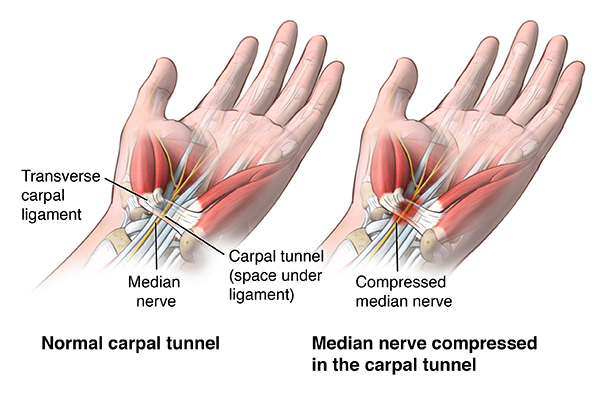
CTS develops when there’s compression of the median nerve, which runs through a space in the wrist called the carpal tunnel. To understand how this happens, imagine wearing a bracelet that’s too small for your arm. Such a bracelet would constrict the soft tissues around your wrist, impinging on the carpal tunnel and the median nerve within.
Something similar to a tight bracelet can develop when you perform prolonged activities that involve the hand and forearm, like typing or using hand tools. These activities involve extensive wrist flexion (bending the wrist upward when the palm is facing up, as if you were lifting a table) and wrist extension (bending the wrist upward when the palm is facing down, as if you were waving to someone), which can lead to inflammation in the tendons. Like the bracelet, this inflammation compresses the carpal tunnel.
Even if typing and using hand tools aren’t in your day-to-day routine, such inflammation can still affect you. Traditionally, health-care providers considered CTS to be a work-related disorder, with typing and repetitive strain being the main culprits. They now know, however, that factors like pregnancy, obesity, rheumatoid arthritis and thyroid disease can also predispose people to swelling in the carpal tunnel, putting them at risk of getting CTS.
If you don’t get care for the condition, it can worsen over time. Fortunately, chiropractic care can successfully manage CTS. Your chiropractor can relieve swelling and inflammation, rehabilitate the affected wrist and provide you with advice that can prevent the condition from recurring. Depending on the factors underlying the condition, you may also need to see a medical doctor, in which case your chiropractor can make an appropriate referral.
Our Primary Techniques Explained
More often than not, when we tell someone that we are a chiropractic office, they immediately associate our vocation with neck and/or back pain. What many do not realize, however, is that chiropractic is a health care modality that provides significantly more than just a solution for pain.
Chiropractic is a lifestyle that involves all aspects of wellness, including exercise, nutrition, personal development, and stress relief. We have been fortunate to work with people from all walks of life (including newborns, children, and adolescents) and the outcome has been miraculous.
Speciality Pilates equipment
We use a mix of specialised equipment including Pilates reformers, trapeze tables, fit balls, foam rollers and more. This equipment is designed specifically for clinical Pilates, promoting correct technique, appropriate resistance levels, and targeted exercises so you can really work your key areas and see results.
Our instructors also spend extra time teaching key muscle contraction techniques, which enables you to get more out of every Pilates workout session.