




TMJ
Sometimes, it’s pretty easy to tell if you have a jaw misalignment. Many people instantly notice jaw pain or muscle tension around the jaw, which is one of the most common indicators that you may have an issue developing. However, there are other symptoms that may let you know there is an issue going on:
- Severe jaw pain
- Popping or clicking in the jaw
- Ear popping
- Slurred speech
- Headaches
Neck pain
It is important to know that there are some people who have a misaligned jaw, but can have zero symptoms in the moment. However, over time, this misalignment can lead to more serious problems including headaches, migraines, dental issues and even slurred speech.
If you are unsure if you are dealing with a misaligned jaw, here are a few questions you can ask yourself first before making an appointment with your chiropractor.
1. Does my chin move to one side when I open or close my mouth?
2. Do I hear a clicking or popping sound coming from my jaw when I move my mouth?
3. Do I wake up in the morning with jaw pain, soreness or stiffness?
4. Do I have limited movement in the jaw?
5. Do I get dizziness or earaches quite often?
6. Do my upper and lower teeth not fit together?
7. Does my jaw hurt or feel fatigued after I eat?
8. Do I tend to get headaches when I’m stressed out?
A full examination can help determine whether or not you have a TMJ or jaw issue that requires attention.
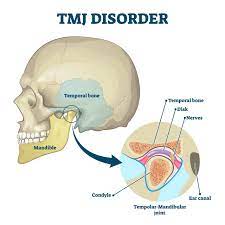
When it comes to pain in the jaw, you will often hear the term, “TMJ’ used to describe this condition. What exactly does TMJ mean?
TMJ is a term used to describe a group of conditions that cause pain and dysfunction in the jaw joint and in the muscles that control jaw movement. These conditions typically fall into three main categories:
- Myofascial Pain: Discomfort in the muscles responsible for jaw function.
- Internal Derangement: Displaced discs, injuries or a dislocation in the jaw.
- Arthritis: Inflammatory or degenerative joint disorders that can impact the temporomandibular joint in the jaw.
You can have one or more of these TMJ conditions at once, they are not mutually exclusive. Researchers estimate that TMJ disorders impact over 10 million Americans.
What Are Some of the Most Common Jaw/TMJ Conditions A Chiropractor Can Treat?
There are a few different jaw or TMJ conditions we treat here at our chiropractic office. This includes the following conditions:
- Degenerative TMJ disorder
- Subluxation in the Jaw
- TMJ Displacement
- Capsulitis
- Polyarthritis in the TMJ
- Synovitis
- Myofascial pain disorder
- Osteoarthritis of TMJ
After a full examination, health history and x-rays, your doctor will be able to determine the best type of adjustment and treatment plan needed for your specific condition. Many times, we have patients who come in and who are completely unaware that they have a TMJ condition.
Many times misalignments in the jaw can occur from past traumas including car accidents, braces, whiplash injuries, falls, head trauma, poor sleeping positions, improper ergonomics and poor posture.
Should You Realign Your Own Jaw?
No. Even if your jaw is painful or irritating, you should never try to pop your TMJ back into place yourself. We never recommend trying to “pop” or “shift” a misaligned joint back into place yourself as it can cause a serious injury or make your problem even worse.
This is particularly important when it comes to a sensitive joint like the jaw. If the pain is too much to bear, then immediately use ice directly on the jaw to get some relief and call a doctor of chiropractic for an appointment. Here at McAuliffe Chiropractic Office, we offer same-day appointments for patients who need immediate relief for painful issues such as this.
What to Expect From the TMJ Chiropractic Technique
If you are struggling with TMJ or jaw issues, the best way to treat this issue is to visit a chiropractor. After a detailed evaluation, a doctor of chiropractic will determine which type of manual adjustment is needed to treat your condition.
TMJ adjustments are very gentle. You won’t hear or feel the same type of popping or cracking you experience with other types of chiropractic adjustments. Depending on the type of misalignment you are dealing with, your doctor may do one of a few different types of chiropractic adjustments:
- Manual, deep tissue massage of the muscles surrounding the jaw
- Activator adjustment to the TMJ using a handheld, spring-loaded instrument
- Manual adjustment to the neck
- Jaw exercises to strengthen the misaligned joint
You will find that these adjustments are quick, comfortable and effective—and that they can finally help you get rid of all of your jaw-related symptoms and issues.
In order to determine the best course of action to correct your specific TMJ issue—schedule an evaluation with one of our doctors today.
You can book right online or give our office a call at (758) 518-5000. Our team of have been treating TMJ and jaw issues and can help diagnose and treat any jaw related issues you may be experiencing.
