





Common causes (and things you didn’t know that cause neck pain!):
- Muscle Tension
Staying in long postures for a period of time (think sitting in front of the laptop) can cause tension to build up in our upper shoulders. These muscles link our shoulders to the neck, and can cause feelings of pain, stiffness, or a pulling and aching sensation around our neck. Common muscles are the upper trapezius, levator scapulae, and scalenes.
- Disc Injury and Nerve Sensitivity
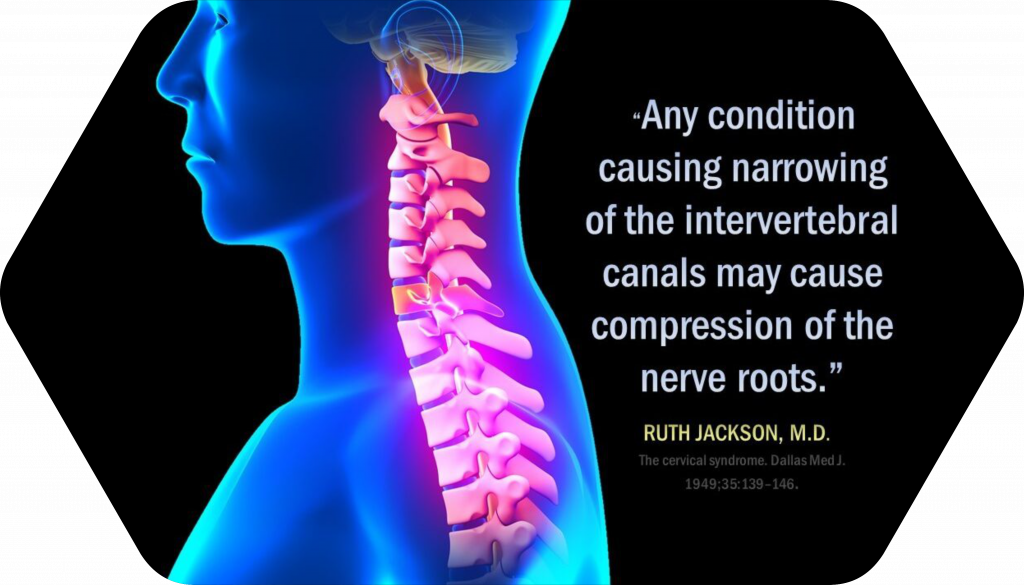
We know that disc injuries happen commonly in the lower back, but they can happen around our neck too. When this happens, even small movements of our neck can trigger a sharp pain, and possible numbness/tingling down our shoulder or arm. When that happens, our nerves which are right next to the spinal discs, become irritated and sensitive!
- Change in Neck Structure
 Our neck is supposed to be in a C-shape, and accidents or loads on it over time may cause changes like a reverse-C shape (Like the picture above). This doesn’t always equal headaches or pain, but in some cases, it may be a contributing factor for muscle tension and nerve sensitivity.
Neck Pain Exercises for Muscle Tension and Recovery Time
Common recovery time: 2-4 weeks
Stretching! Neck stretching exercises are an easy way to reduce muscle tension, especially at the work desk. It takes minimal time and can be done throughout the day without you needing to walk around looking for work-out equipment. Simply hold one side of your head and pull it down to the opposite side’s shoulder — to stretch your left neck, bring your arm up and hold the left side of your head, then pull the head down to the right. You will feel a stretch on the left neck. Hold for 10 seconds, 3 repetitions, and perform on the opposite side!
Exercises for: Disc Injury and Nerve Sensitivity
Common recovery time: 6 to 12 weeks
Gentle chin tucks. Lie down with a pillow supporting the back of your neck. Gently push the back of your head towards the pillow, creating a double chin. Hold it for 3 seconds, and relax the neck. Repeat for 5 times. WARNING! Only do this if the pain is not severe and does not affect your daily activities. If pain increases after doing this, ice the neck for 10 minutes, and make an appointment with your chiropractor or physiotherapist as it may be more severe.
Exercises for: Change in Neck Structure
Common recovery time: Variable, depending on severity
Neck extension mobilisations. Put the long length of the towel behind your neck and hold both ends in your hands. Slowly pull both ends of the towel forward and drop your head backwards to look up at the ceiling. You should feel a forward pulling pressure around your neck. Repeat 10 times hourly. This helps to mobilise stiff necks that have changed their structure, but do not do this if you suspect a nerve injury.
What Kind of Treatments Can Help Solve Neck Pain and Headaches?
Chiropractic adjustments
Spinal adjustments help to relieve pain and compression on the spine, which facilitates healing.
Physiotherapy rehabilitation
Specific exercises enable you to maintain the positive changes created in your body, making sure the effects are long-lasting and that you do not need to rely on us.
Spinal orthotics
We use Chiropractic BioPhysics® techniques and evidence-based models to help relieve stiffness and improve curvature in the neck. Read on here to find out how this helps restore the spine’s curvature!

Decompression therapy
In cases where the disc and nerves are involved, a gentle stretching using our one-of-a-kind machine helps to reduce the pressure placed on the neck and improve numbness, tingling, and radiating pain down the arm.
What are the Quick Ways to Relief Neck Pain At Home?
Ice the neck
Applying ice (or a pack of frozen peas) around your neck can help relieve inflammation and reduce the intensity of headaches. Apply them wrapped in a damp towel for 10 minutes, several times throughout the day.
Try sleeping in a different position
When your neck is sensitive, even the way you sleep can be something that makes it hurt. We’ve put together a list of different sleeping positions that you could try out, and see if it makes a difference.
Ergonomics
May play a big role if working in front of the computer is a major part of your job! As something that you’ll be doing for at least 50% of your day, make sure that your set-up is optimal by following these tips. You can also visit our partners, Ergoland for some products that can help with your home ergonomics setup.
Reduce Stress
We might not realise it, but our bodies also respond to stress. So — take a deep breath, and relax your shoulders when you exhale. Unclench your jaw, take a break from the computer!
If you’ve tried these tips and you’re still being bothered with neck pain and headaches, call us to set up an appointment and let’s get started on your journey to pain-free movement.
More often than not, when we tell someone that we are a chiropractic office, they immediately associate our vocation with neck and/or back pain. What many do not realize, however, is that chiropractic is a health care modality that provides significantly more than just a solution for pain.
Chiropractic is a lifestyle that involves all aspects of wellness, including exercise, nutrition, personal development, and stress relief. We have been fortunate to work with people from all walks of life (including newborns, children, and adolescents) and the outcome has been miraculous.
Whiplash, also known as cervical acceleration-deceleration syndrome (CAD), occurs when the human body confronts the laws of physics. More specifically, when people accelerate, in a car or on foot, the parts of their body that are in motion will stay in motion unless an external force slows them down.
When a sudden impact, like a car collision, brings the body to a halt, the head wants to keep traveling. It yanks on the neck, snapping backward and forward, damaging ligaments, muscles and other soft tissues, and injuring vertebrae and vertebral joints in the process.
Those who have whiplash often develop neck pain and stiffness within several hours or, more commonly, a day after the accident. Other symptoms that may follow include headaches, blurry vision, shoulder pain, back pain, anxiety and dizziness.
Rear-end car collisions most commonly cause the injury, but collisions from the front and side, contact sports and convulsions can as well. Usually, someone in a stopped or slow-moving car gets hit from behind and doesn’t have time to react; the whole cervical acceleration-deceleration process takes only one-twentieth of a second.
In rare and extreme cases, whiplash can cause a vertebral fracture, which can lead to severe spinal cord injuries. While the vast majority of whiplash injuries do not involve fractures that lead to instability, it’s important to have your chiropractor or a medical doctor evaluate and manage the injury. In severe cases, this may necessitate the use of an MRI or CAT scan, and possibly a cervical collar to stabilize the neck.
If you have whiplash, there’s no way to tell precisely how long your symptoms will last. Depending on the severity of the injury, some people suffer for years and others suffer just a few hours. Your chiropractor can determine the extent of your injury, estimate how long it will take to heal and offer care to speed your recovery.
Whiplash Injury – Symptoms, Treatments, Recovery
A broken bone shows up on a simple X-Ray, a nerve pain can show up on an MRI scan. But whiplash injury? It can often not be as direct of a finding as a broken bone or pinched nerve. Whiplash injuries often involve an unpredictable combination of injuries and sensitivity to the nerves, muscles, joints, and surrounding connective tissues (like your joint capsules and ligaments). This makes it not as simple to diagnose, and not so simple to treat. This article will help you to understand the nature of whiplash injuries and how they should be treated.
What Is Whiplash?
Let’s start with defining what exactly whiplash is. Years ago, scientists thought that whiplash injuries happened from, well, whipping your head back and forth too much! They thought that if the head was moved beyond its normal ranges, say extremely forward or extremely backwards, this was what caused a whiplash injury to the muscles, joints, and nerves around the neck and head.
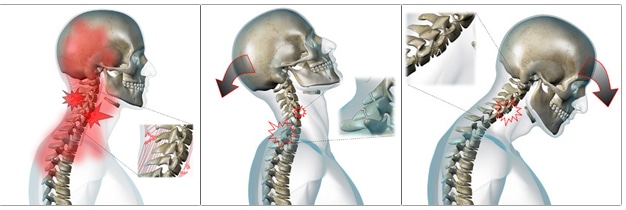
Now, the current definition of whiplash is, “bony or soft tissue injuries” resulting from “rear-end or side impact, predominantly in motor vehicle accidents, and from other mishaps” as a result of “an acceleration-deceleration mechanism of energy transfer to the neck”.
This means that if the head moves back and forth quickly enough (usually from a rear-end accident or impact), even if the range is not huge, it can cause a whiplash injury because the speed is what transfers energy and injury to the head and neck – not the range.
What Are The Symptoms Of Whiplash
When no bones are broken and the head does not strike the windshield, typical symptoms include:
- 62% – 98% complain of neck pain
- 66% – 70% complain of headaches
- Shoulder & Arm Pain
Other symptoms include:
- Blurred Vision
- Dizziness
- Low back pain and or stiffness
- Vertigo
- Difficulty swallowing
- Nausea
- Numbness and tingling
- Irritability
- Pain in the jaw or face
- Fatigue
- Ringing in the ears
- Pain in the arms, legs, feet and hands
If you experience any of these symptoms, play it safe and book a chiropractic check-up.
Common Accidents That Cause Whiplash Injury
The common situations where a whiplash injury can occur are:
- Car Accidents
When you get rear-ended, your body goes through an extremely rapid and intense acceleration and deceleration and takes your head and neck along for the ride. The rapid back and forth happens from the impact to the car, and the opposing forces where your body falls forward and then backwards again. In fact, all phases of a whiplash injury occur in less than one-half of a second! Some people may find it surprising that whiplash can still occur even after a minor accident, where the vehicles involved were driving at less than 14 miles per hour.
- Airplane Turbulence
Airplane turbulence can work very similarly to how whiplash occurs in a car accident. When your airplane ride gets bumpy enough but your body still remains strapped into your seat with a belt, the body parts which are free to move get the majority of the load – your neck. You might find your head shifting back and forth quickly with turbulence, and when it gets bumpy enough, the force can be large enough to cause a whiplash injury.
- Sports Training
Sports that may have more impact, such as rugby and football, or sports which involve speed like motor racing, can cause significant injury to the neck depending on how the body falls. Certain impacts such as a body falling rapidly to the ground can cause a sudden ‘whipping’ movement of the head which results in a whiplash injury.
Symptoms of Whiplash
Many car accident victims experience whiplash injuries, yet they don’t always seek medical attention right away. Why not? This is because whiplash symptoms don’t always appear immediately following any form of accident. It’s pretty common that a person with whiplash can go for days or weeks with progressively worsening symptoms before realising that something is wrong. Things to look out for if you’ve been in a recent accident (even a mild one) are:
- Neck pain
Neck pain is one of the most common indicators of whiplash. This can be progressive and slowly build up hours to days after an accident. It occurs after muscles, ligaments, and tendons are sprained and strained by the rapid backwards movement of your head and neck.
- Neck stiffness
Neck stiffness can happen as a protective mechanism to injury. The neck is made out of solid bony blocks known as vertebrae, which stack up on top of each other and have a flexible disc in between them to help with movement. The force from the accident can jolt your vertebrae out of alignment or fracture them, resulting in sharp neck pain and the inability to move your head fully.
- Shoulder and back pain
Shoulder or back pain can happen as a result of your lower body absorbing impact from the injury. The muscles that connect to your neck also connect to your shoulder, and any neck sprain can cause residual shoulder pain. Even if your neck pain is mild, if you’re feeling the effects on other parts of your body, that definitely means the impact was there.
- Numbness in arms/hand
Can whiplash cause neurological problems? The answer is yes. Numbness most often happens when there is a nerve or disc involvement. This can mean that the whiplash injury has caused your neck alignment to move out of position, and created a compression on to the nerves of your neck. This results in numbness and weakness of your arms/hands.
- Dizziness
Dizziness following a whiplash injury usually results from injury to the facet joints of the cervical spine – small joints in your spine that help your head to turn left and right, and side to side. Although in some severe whiplash cases, dizziness can be a result of injuries to the brain causing a concussion. Typically, this dizziness is very temporary and improves significantly with physiotherapy and chiropractic treatment for whiplash injury.

- Difficulty concentrating
Difficulty concentrating can come from a range of factors – pain, stiffness, or dizziness can all interrupt focus. Whiplash can also cause headaches which affect your concentration.
How To Check The Severity of Whiplash?
The severity of whiplash injuries often goes by the grading of symptoms. If you’re at home and wondering how to check how severe your whiplash is, try and match your symptoms to this grading system by the Quebec Task Force on Whiplash Associated Disorders from Day 1 of your accident until Day 7.
| Grade | Symptoms |
| 0 | No complaint about the neck |
| 1 | Neck complaint of pain, stiffness or tenderness (General symptoms) |
| 2 | Neck complaint (Pain, stiffness) and musculoskeletal signs – reduced range of motion and localized tenderness (Symptoms become worse) |
| 3 | Neck complaint (Pain, stiffness, tenderness) and neurological signs – decreased or absent deep tendon reflexes, weakness, and sensory deficits (numbness, tingling in the arms and hands, dizziness) |
| 4 | Neck complain and fracture or dislocation – Extreme pain, unable to move neck, can’t sleep at night, severe weakness and numbness in arms/hands, dizziness |
When Do I Need To See A Doctor?
If at any point you start to feel arm and hand weakness and numbness, like a sudden reduction in strength and sensation, or are having extreme pain in the neck that may appear with headaches or dizziness, or are suddenly having difficulty walking, you need to see a doctor to get an X-Ray or MRI to rule out any serious life-threatening fractures and injuries.
How Long Does Whiplash Injury Last?
How long a whiplash injury takes to heal depends on the severity of your whiplash and whether you have had previous neck injuries before. In general, mild whiplash injuries can take 2-4 weeks to heal, and more serious injuries (that experience more pain, stiffness, or weakness) may take anywhere from 6-12 weeks to recover.
Whiplash can seem to heal on its own because the body is an amazing and adaptable system, but it often comes at a cost. Old whiplash injuries that have not been treated well can result in laxity (instability and weakness) of the neck, and predispose a person to a higher risk of injury again in the future. This is why we recommend getting checked out immediately after any accidents, to ensure that your neck did not suffer any unwanted repercussions of an accident or injury.
Chiropractic Treatment for Whiplash
Whiplash injuries to the cervical spine (neck) can help with chiropractic care. When serious nerve injuries are ruled out, neck stiffness can often be a result of the neck’s protective mechanism and cause joint stiffness that doesn’t seem to want to relax. A trained chiropractor is able to identify the segments which are restricted, and through gentle treatment, they are able to relieve the stiffness of the spine. Specific chiropractic care by an experienced professional is important because whiplash can often come along with laxity (a.k.a. hypermobility) and adjustments need to be individualized to the person.
Physiotherapy for whiplash often involves rehabilitative exercises for the neck. Gradual strengthening of the tiny muscles around the head and neck goes a long way in staving off long-term pain and stiffness, as well as helping the individual to gain strength for prevention of future neck injuries. A spinal orthotic may be introduced in the session to help your neck regain back its original curves that may be affected after a car injury causing cervical spine misalignment.
If you think you may be experiencing whiplash, or have an old untreated whiplash injury which is currently giving you pain and stiffness, book an appointment with us today. Whether a fresh injury or an old injury, there is surely something that can be done for you.
You could have vertebral subluxation complex (VSC) of the cervical spine and not even know it. A complex condition comprising five different components, VSC may not elicit feelings of pain or discomfort in its initial stages, as pain does not always accompany a lack of function.
Let’s take a step back to see where this condition occurs. Touch the back of your neck to feel your cervical spine. This is the top of the spine, the part that connects with the brain. Beneath it is the thoracic spine, which makes up the mid back, and the lumbar spine, which makes up the low back.
Vertebral subluxation complex (VSC) in the cervical spine occurs when the vertebrae in the neck lose their normal motion or position, which can lead to local inflammation and affect the delicate nerves in the spinal cord that carry messages between the brain and the rest of the body.
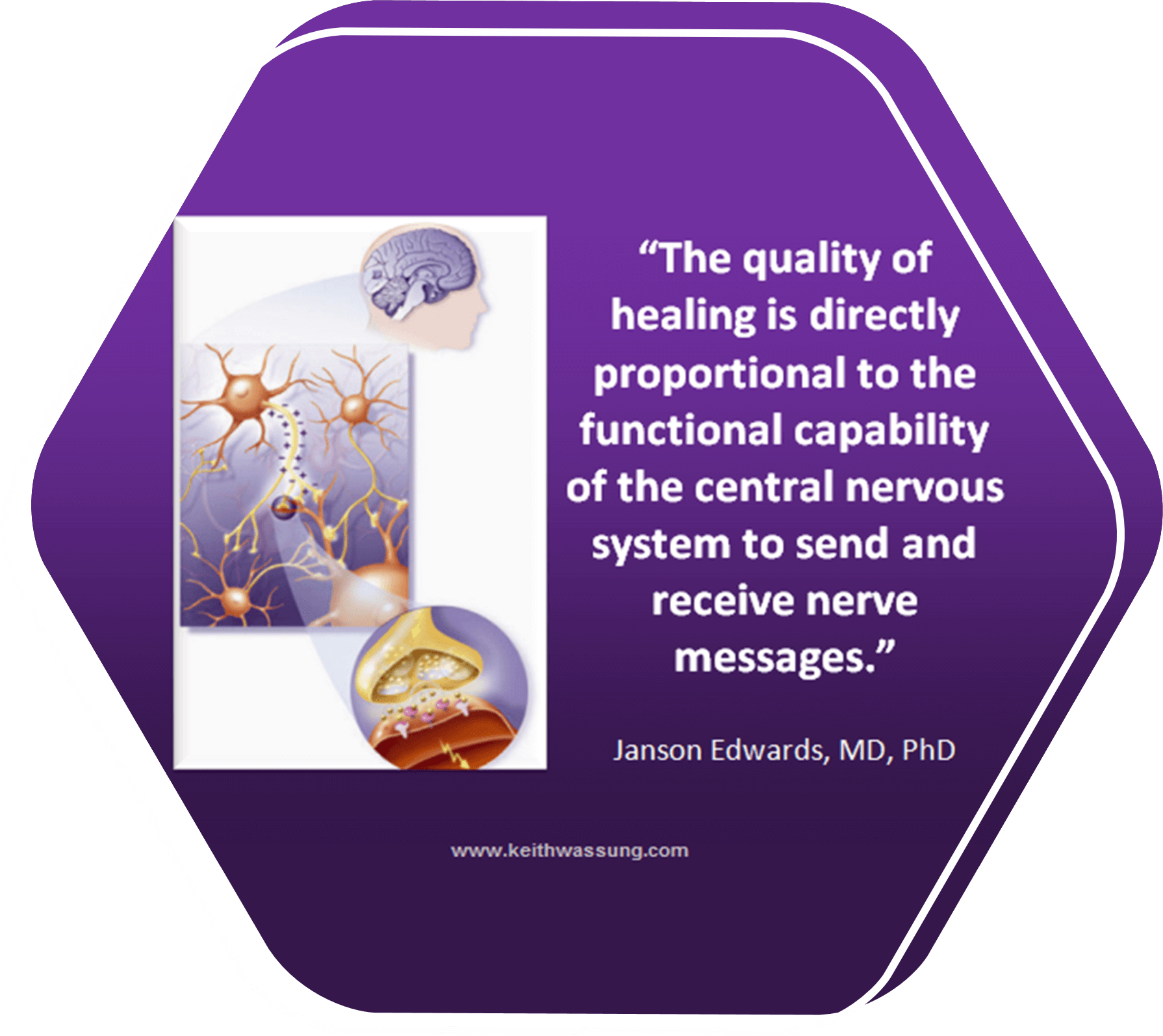
The brain and body communicate via messages that travel through these nerves, which are located along the entire length of the spine. These nerves, along with the brain, collectively make up the central nervous system. They exit the spinal column through holes formed by vertebral joints and send out an extensive network of branches that carry information to specific parts of the body, controlling the health and function of almost every cell, tissue and organ. Research suggests that subluxations affect how these body parts function by interfering with the brain-body communication system. Imagine a healthy nervous system surrounded by clean water, and the interference as muddy and murky water that starts to pollute it.
A variety of external and internal factors can cause subluxations. Since chiropractic’s inception, trauma, toxins and emotional stress have been identified as the primary causes of subluxations. Traumatic causes include car accidents and falls; chemical toxins include alcohol, drugs and environmental pollutants; and emotional stress includes everyday problems like worrying and anxiety.
When any of these is present, it can lead to the beginning of VSC, and possibly the entire five components of the condition. The first stage is kinesiopathology, which begins when spinal joints become stuck, forcing the joints around them to work harder in order to compensate. Unfortunately, this compensation does not change the fact that the spinal joints aren’t functioning properly, and thus the spine’s normal curvature can distort and the stuck joint can contribute to nerve irritation.
Most often, this occurs when malfunctioning spinal bones stretch, twist or pull nerve tissue. When this is serious enough it can lead to neuropathology, the second stage of VSC, which can involve either extreme nerve irritation or a pinched nerve. Pinched nerves, which are quite rare, can produce feelings patients frequently describe as “pins and needles” or a numb sensation surrounding and away from the spine. Irritated nerves can also affect those parts of the body that they communicate with and increase a person’s susceptibility to disease.
This interference in the nervous system can lead to the third component of VSC, myopathology, which involves abnormal muscle function. With myopathology, nerve impulses can diminish to the point that they under stimulate muscles, which causes them to weaken and atrophy, or become too strong and overstimulate muscles, which causes them to work too hard and tighten, and potentially go into spasm. This can lead to inflammation in muscles and joints, which can cause further complications by spreading to the rest of the soft tissues in the spine.
If that happens, it can lead to the fourth component of VSC, histopathology, which involves abnormal function of soft tissue. This occurs when abnormal spinal joint function diminishes blood supply and leads to long-term swelling of structures like ligaments, disks and other soft tissues.
If people don’t seek care during any of these stages, VSC can affect the whole body. This is pathophysiology, the fifth and final stage of VSC, when degenerative changes in the spine begin to spread. At this stage, calcium deposits may have built up, and are eventually recognizable as bone spurs and other abnormal growths. When this happens, your body has gone to the extreme of compensating for a malfunctioning or traumatized joint by actually creating a growth similar to new bone. It has slowly transformed immobile, untreated joints into solid blocks of calcium. This final component of VSC becomes more common as people get older.
While it takes many years for someone to develop problems associated with the final component of VSC, the condition can begin at any age. That’s why it’s important to visit your chiropractor, as he or she can check for subluxations and provide you with optimal care. Your chiropractor may perform adjustments to correct any subluxations, which involve gentle and usually painless thrusts that realign faulty joints and allow the body to heal. Combined with proper spinal care, this can prevent VSC from progressing into a more serious condition.
You’ve probably heard people say, “Sit up straight, keep your shoulders back and don’t slouch.” Children usually get that advice from their parents, and like all good advice it should last a lifetime, because poor posture can lead to a painful condition called postural syndrome.
Postural syndrome can cause physical changes to the body and painful side effects. Most people with the condition notice their shoulders are rounded and tend to droop forward. Muscles that connect the shoulders and the back of the neck to the head then tend to pull the head forward. The resulting position can cause constant, aching pain, stiffness and even burning in the upper and middle back areas, as well as in the shoulder, neck and head. Over time, poor posture can also lead to the development of trigger points (tight muscle fibers), which can refer pain throughout the back and neck, as well as cause headaches.
Poor posture usually develops gradually in people who sit improperly for long periods. Think about how much time you spend sitting. You probably sit in your car, at work, when you’re eating meals and when you’re watching television. And if you’re like most people, you probably tend to sit with a forward bend, which causes your shoulders to become hunched over. This is the opposite of good posture, which is a state of musculoskeletal balance that involves a minimal amount of stress or strain on the body. Over time, poor posture can cause a muscular imbalance in the body. Normally, there are balanced tug-of-war games happening between the chest muscles (pectoralis) and the upper back muscles (rhomboid, middle trapezius and inferior trapezius) and between he muscles that bring your chin to your chest (anterior scalene and sternocleidomastoid) and the muscles in the back of your neck (upper trapezius). No muscle group wins, because they all have equally strong players.
The impasse ends, however, when chronic poor posture gives the chest muscles the advantage. The chest muscles then become tight and short, tugging or pulling the shoulders forward. Chronically tight chest muscles cause the muscles behind the shoulders to become relatively weak. At this point, the stronger muscles pull the spine out of its normal alignment, causing postural changes. Now the shoulders are slouched forward and the head, because of its connection, must follow. In an effort to hold the head up to compensate, the muscles in the back of the neck then become tight, ending the other tug-of-war and causing the head to jut forward.
If you have postural syndrome or just poor posture, it’s important that you see your chiropractor as soon as possible. Postural awareness and chiropractic care can help restore muscle balance and joint health, but since it may have been many years since you started ignoring your parents’ advice, it may take some time for you and your chiropractor to fix the problems.
The pain of facet syndrome is like a fuzzy picture. When a picture is out of focus, you can only make out shadows and shapes but no actual details. Those with facet syndrome often describe their pain this way. They can’t focus in and point to where it originates.
Neck pain, neck stiffness, headaches, shoulder pain and upper back pain are common symptoms of facet syndrome. The pain often worsens when people with the condition put their neck in certain positions (like rotated to the side, bent back or leaned forward), after they do activities that involve extending the neck and after they experience long periods of inactivity, like sleeping. It tends to get better throughout the day after tissues warm up.
Cervical facet syndrome can develop after patients suddenly turn their head, have a car accident, hold their neck in a particular position for a long time, have vertebral subluxations (stuck or misaligned joints), or develop poor posture or sleeping habits.
Some occupations, like secretarial positions, also make people prone to the condition, because of the neck’s angle while people are looking at their computer or holding a phone to their shoulder. This angle places stress on the neck, which leads to inflammation and pain.
The pain comes from the cervical facet joints, which are joints at the back of the vertebrae (spinal bones) in your neck. When these joints are subluxated (stuck or misaligned) or irritated, local inflammation develops that can lead to subsequent irritation of surrounding nerves. When this happens, the irritated facet joints can refer (move) pain through these nerves to other areas of the body. The exact area the pain moves to depends on which facet joint is irritated. The second and third facet joints, for example, may refer pain into the back, while the sixth and seventh joints may refer pain into the shoulder blade area.
Facet syndrome is closely related to facet irritation, which is a similar condition that involves irritation and dysfunction of the facet joint. The difference between the two is that with facet irritation the pain is localized to the facet joints and with facet syndrome the pain is present in the joints as well as other areas.
Chiropractors are experts at dealing with either of these conditions and can usually relieve the pain of cervical facet syndrome with simple joint adjustments, also known as spinal manipulative therapy. By seeing your chiropractor regularly and beginning an exercise program, you can then help prevent the condition from returning.
Reach behind and feel the back of your neck. This is your cervical spine. Cervical facet irritation is a painful condition affecting the joints in this area, called the cervical facet joints. These are responsible for connecting the vertebrae (individual bones) in the spine, providing the cervical spine with protection, allowing for normal range of motion, limiting excessive range of motion and preventing the vertebrae from locking together.
People with cervical facet irritation have problems with these joints, and for that reason primarily complain of neck stiffness, often accompanied by shoulder pain and upper back pain. The pain tends to worsen when they tilt their head back in a way that compresses the irritated area.
Cervical facet irritation develops when there’s inflammation of the facet joints. Awkward neck movements, subluxations (stuck or misaligned joints), acute injuries, poor posture and tightness in the muscles that attach the back and shoulder to the cervical spine can place stress on the cervical facet joints and limit their motion, which leads to irritation and local pain.
Subluxations are major contributors to the condition, because they limit the joints’ ability to move through their normal range of motion, preventing them from functioning properly. When the joints are aligned and able to move through their normal range of motion, they lubricate themselves and remain healthy. When subluxated, however, they no longer lubricate themselves and begin to stick, like an unused door hinge. This stickiness causes irritation.
Such problems generally occur after people hold their neck in a particular position for a long time or develop poor posture or sleeping habits. If you have ever fallen asleep and woken up with a sore, stiff neck then you’ve probably experienced this. While you were sleeping, your neck was most likely in a vulnerable position. Some occupations, like secretarial positions, also tend to cause this, because of the neck’s angle while people are looking at their computer or holding a phone to their shoulder. Jobs that require staring at a computer screen, answering telephones or lifting heavy objects can strain neck and back muscles, increasing people’s risk of the condition.
If the causes and symptoms of cervical facet irritation sound familiar, see your chiropractor as soon as possible. Cervical facet irritation is closely related to cervical facet syndrome, a more serious condition that involves referred pain in the shoulder, upper back and sometimes back of the head. Facet irritation often precedes facet syndrome, particularly when people don’t get their facet irritation cared for properly.
Fortunately, your chiropractor can provide effective care for cervical facet irritation and help prevent cervical facet syndrome from developing. He or she will probably use an adjustment, also known as spinal manipulative therapy, to restore movement in any irritated joints, promote healing and relax tight muscles.
Almost every movement you perform involves your joints. Walking, running, typing, and lifting are just a few of the common things people do that would be impossible without joints. To prevent our bones from wearing down during these movements, our joints rely on cartilage, a spongy tissue that helps to cushion the friction between connecting bones. Without it, everyday activities would be painful.
Osteoarthritis (OA) is a degenerative joint disease that causes this cartilage to break down and become rough and flaky, making movement in the affected area difficult. OA usually occurs in weight-bearing joints, like the hips or the knees, which support the body. However, any joint can become affected. In fact, OA can occur in several joints at the same time. It’s possible, for example, to have pain in one knee and not the other, and at the same time have pain in the shoulder or the ankle.
Patients with OA often report having mild pain, morning stiffness and limited movement in the affected joint. The pain tends to come in bouts, with particularly painful periods followed by periods of relief. Patients usually report the most discomfort at night and after extensive use of the affected joint. Some patients also complain of a complete loss of motion in certain areas, although this is rare.
No one knows for sure what causes OA, but age and obesity seem to play a role. Almost everyone experiences some changes in their joints by the age of 40, and although few people show any symptoms, OA occurs most often in those who are middle-aged and older. Obesity also increases the risk of becoming affected as extra weight puts more stress on joints.
While there’s no cure for OA, your chiropractor can implement a management plan that prevents its progression, promotes joint health and relieves pain. By seeing your chiropractor and adopting lifestyle changes, you can reduce the condition’s debilitating effects.
A neck injury can potentially affect cranial nerves, and chiropractic care may be used to help manage symptoms by addressing spinal misalignments that could be putting pressure on these nerves, particularly in the upper cervical spine where many cranial nerves exit the brain stem; however, it’s crucial to consult a healthcare professional for proper diagnosis and treatment, especially if there are signs of serious neurological damage.
cranial nerves innervate the vital organs, and these nerves do not stem from the spinal cord. The cranial nerves originate in the brainstem, this is the area of the spine that is surrounded and protected by the upper-cervical spine (occiput, atlas and axis).
From the superior cervical ganglion, post-ganglionic fibers arise, which divide into: anastomoses with the lower cranial nerves and with the first four cervical nerves, via gray rami communicantes.
Cranial Nerve Functions
Here is a list of the 12 cranial nerves along with brief outlines of their functions.
- I Olfactory: Along with cranial nerve II, the olfactory nerve exits from the cerebrum, the main body of the brain. The remaining ten cranial nerves all arise from the brainstem. The olfactory nerve is responsible for the sense of smell.
- II Optic: This nerve makes vision possible.
- III Oculomotor: This nerve allows for dilation and constriction of the pupils as well as some eye movements.
- IV Trochlear: The trochlear nerve is also responsible for certain eye movements.
- V Trigeminal: This nerve takes care of sensation in the face as well as the movement of the muscles used in chewing.
- VI Abducens: Another nerve that controls eye movement, the abducens is responsible for outward gaze.
- VII Facial: The facial nerve is responsible for taste, facial expressions, and facial glands.
- VIII Vestibulocochlear: This nerve controls hearing and balance.
- IX Glossopharyngeal: Along with the facial nerve, this cranial nerve is responsible for taste and control of some glands.
X Vagus: This crucial cranial nerve controls many of the thoracic organs like the heart, lungs, and digestive tract. - XI Accessory: This nerve controls the movement of certain muscles in the neck and upper back.
- XII Hypoglossal: Tongue movements are controlled by this cranial nerve.
The superior cervical ganglion (SCG) is the largest of the cervical ganglia and is the only ganglion in the sympathetic nervous system that innervates the head and neck. The SCG connects to the cranial nerves via the gray rami communicantes.
When cranial nerve function is impaired by disease or injuries, chiropractic care can be invaluable. Although cranial nerves do not travel through the spine, they can still become pinched or trapped. Chiropractic release, along with other non-invasive treatment modalities, can offer gentle methods of restoring function and sensation.
